The restoration of a faulty solar water pump in Jogidalhi shows how an effective grievance mechanism can bring immediate relief to rural communities. The larger challenge is ensuring that such solutions are timely and lasting.
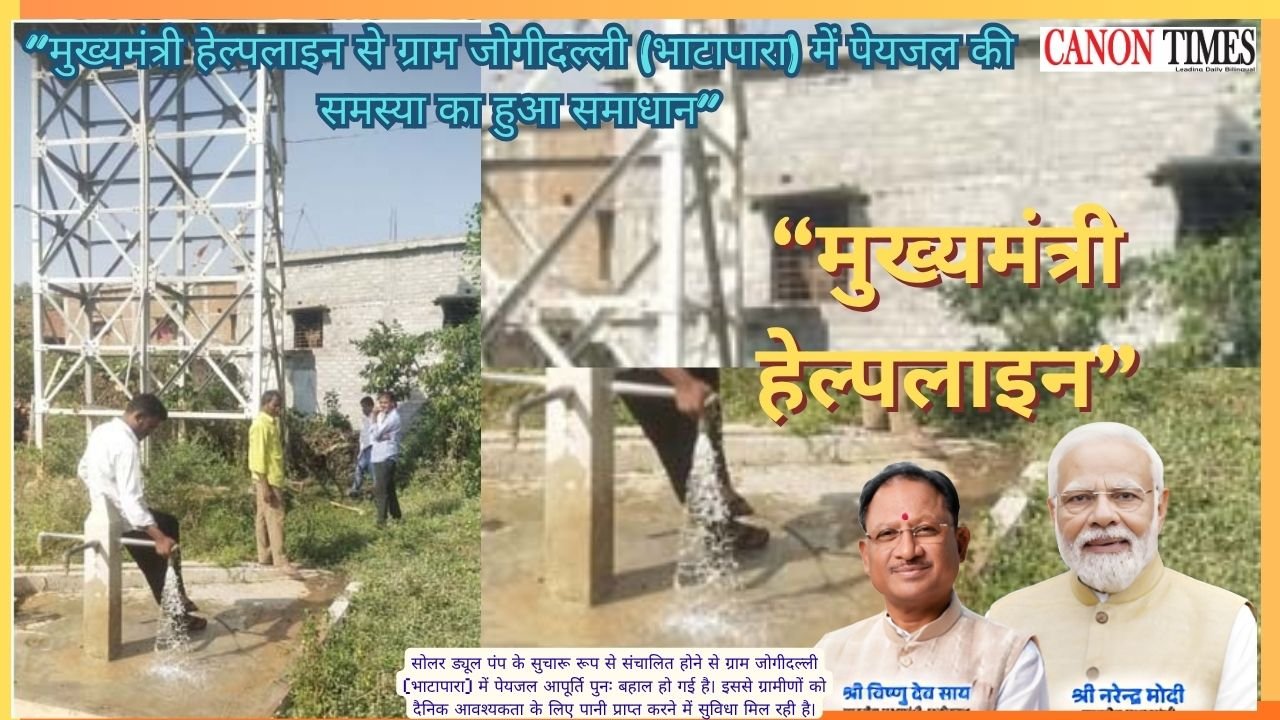
Access to safe drinking water is a basic necessity, and even a temporary disruption can create serious difficulties for rural households. In Jogidalhi (Bhatapara), a hamlet under Bhainsatara Gram Panchayat in Rajnandgaon district, the failure of a solar-powered dual pump had left residents struggling to meet their daily water needs. The problem was resolved after the village sarpanch raised a complaint through the Chief Minister’s Helpline.

Following the complaint by Sarpanch Anjali Verma, the Chhattisgarh Renewable Energy Development Agency (CREDA) took action to identify and repair the technical fault. The pump was restored to working condition, bringing drinking water supply back to the village. For residents who depend on this facility, the intervention meant relief from an immediate and essential hardship.
The incident highlights the value of a responsive public grievance system. Citizens, particularly in remote villages, often have limited means to approach government departments directly or secure attention for local problems. A helpline can bridge this gap by providing a formal channel through which complaints are registered, forwarded to the responsible department and followed up until action is taken.
Yet, the effectiveness of such a system should not be judged simply by the number of complaints resolved. The quality and durability of the solution matter equally. Repairing a pump is important, but ensuring that it continues to function is essential. Solar water systems require regular technical inspections, timely maintenance, availability of spare parts and trained personnel who can respond quickly when faults occur.
There is also a need for transparent complaint tracking. Residents should know whether their grievance has been received, which department is responsible and whether the proposed solution has actually addressed the problem. Feedback from the affected community should form an important part of the closure process.
The Jogidalhi case also underlines the importance of maintaining rural infrastructure after installation. Public investment in solar-powered water facilities can deliver substantial benefits, but those benefits are lost when equipment remains out of order for extended periods.
A responsive helpline is a useful instrument of governance, but it must be backed by accountable departments and preventive maintenance. The real measure of success is not merely how quickly a complaint is closed, but whether people continue to receive reliable drinking water long after the complaint has been resolved. For rural communities, dependable access to water must remain a permanent public service, not an occasional administrative achievement.

Author: This news is edited by: Abhishek Verma, (Editor, CANON TIMES)
Authentic news.