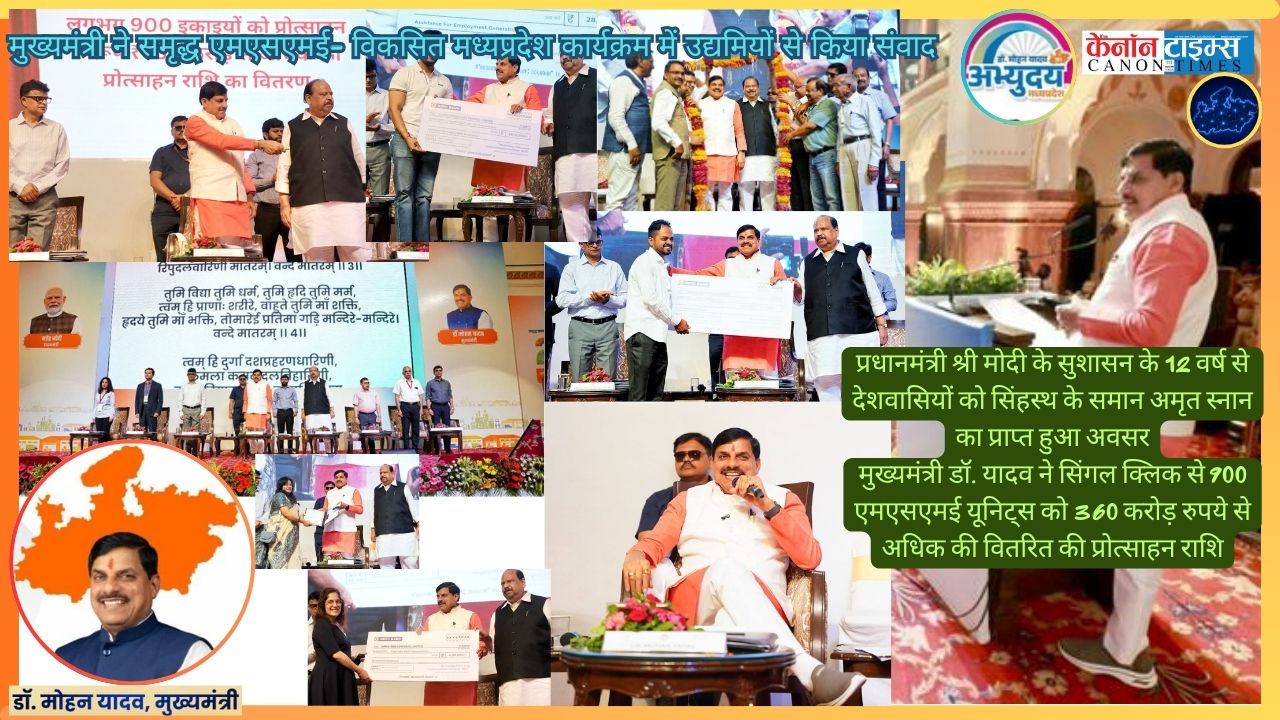
Madhya Pradesh’s pledge to nurture one crore MSME’s by 2047 and the recent disbursal of over Rs 360 crore to 900 units mark a high energy moment for the state. Incentives, cleared dues and visible handholding have given entrepreneurs confidence and generated real momentum.
The state already hosts more than 24 lakh MSME units that employ over 1.25 crore people and the rise of women led enterprises and startups is especially encouraging. But ambitions must be matched by an ecosystem that converts grants and land allotments into durable businesses and quality jobs.

Three practical priorities should guide the next phase. First, build local supplier ecosystems. New units will succeed only if proximate vendors supply inputs, packaging and testing services. Supplier development programmes, quality certification support and concessional finance for ancillaries will keep value within districts and multiply employment. Second, invest in skills and compliance. State backed skilling centres, modular courses and industry apprenticeships must supply technicians versed in modern manufacturing, quality assurance and regulatory practice so firms do not stall on capability gaps. Third, link incentives to outcomes. Subsidies and reimbursements should be conditional on measurable milestones such as local hiring, percentage of local procurement, environmental compliance and production targets. Public scorecards will promote accountability and reduce diversion.
Other enablers matter too. Common facility centres for testing and packaging, better market linkages and export facilitation will help MSME’s graduate from local suppliers to national and global value chains. Environmental safeguards and community engagement must be non negotiable so growth stays sustainable and socially acceptable. Finally, the state’s handholding must extend beyond first cheques to mentoring, working capital access and help meeting global standards.
Ambition without delivery yields only headlines. Madhya Pradesh has set the target and created momentum. The real test is whether policy design, institutional capacity and diligent implementation can turn allocated plots into thriving factories, and incentives into lasting livelihoods. If the state pairs financial support with supplier development, skills and transparent outcome monitoring, its MSME programme can do more than expand enterprise counts. It can generate inclusive employment, durable local value chains and a resilient industrial base for decades to come.

Author: This news is edited by: Abhishek Verma, (Editor, CANON TIMES)
Authentic news.