The message from Bhopal is clear: Madhya Pradesh wants to be seen not only as a state of agriculture and heritage, but also as a serious industrial destination built on MSME’s, startups and investment friendly policy.
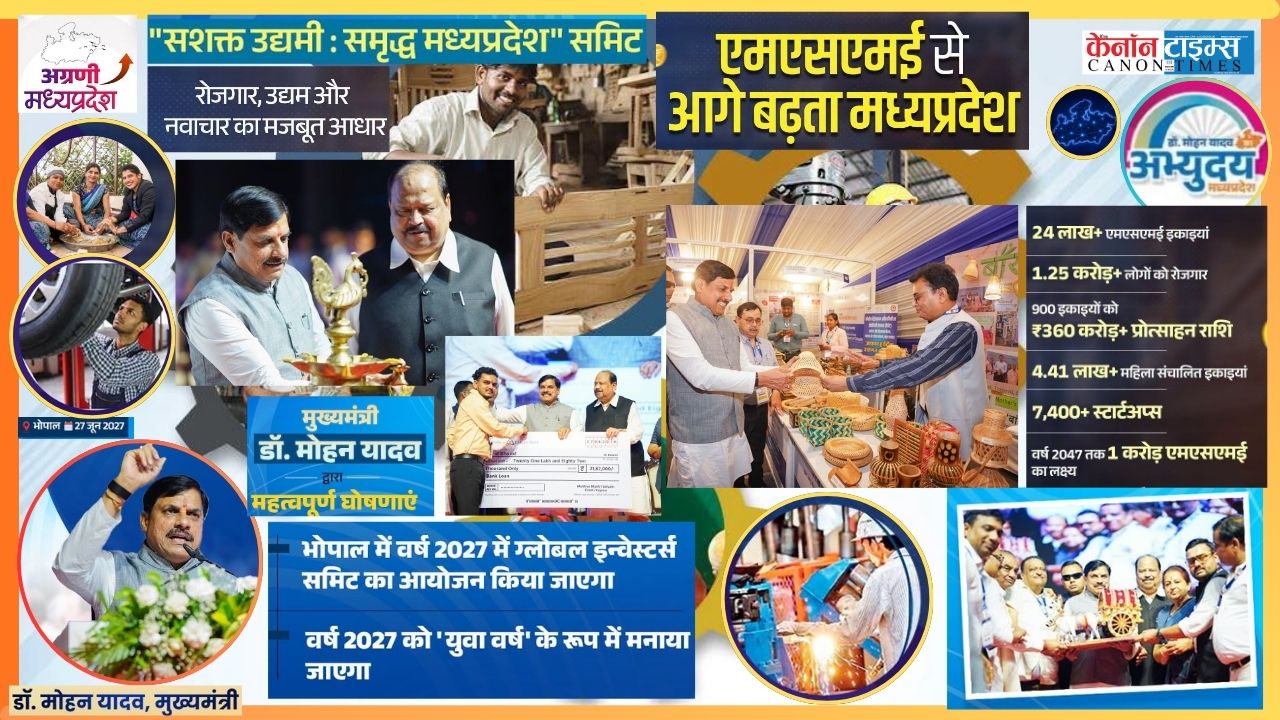
Chief Minister Dr. Mohan Yadav’s declaration that the next Global Investors Summit will be held in Bhopal in 2027, with an invitation planned for Prime Minister Narendra Modi, signals confidence as well as ambition.
More importantly, the state is trying to back that ambition with policy, funding and institutional support rather than rhetoric alone.
The focus on MSME’s is well chosen. Small and medium enterprises are the real backbone of Indian manufacturing, employment and exports.
When a state has over 25 lakh such units and they support millions of jobs, policy must treat them as strategic assets, not peripheral actors. Madhya Pradesh’s reported share in GDP, exports and manufacturing output shows why this sector deserves priority. If the state sustains this momentum, MSME’s can become the bridge between local entrepreneurship and larger industrial transformation.
The release of around Rs 1,500 crore to MSME’s, startups and larger industries is a useful signal of seriousness. Equally notable is the claim that all dues up to May 2026 have been cleared. For entrepreneurs, such clarity matters. Delayed incentives, unclear approvals and unpredictable payments often weaken trust more than any headline policy can repair. By reducing that friction, the government is making the investment climate more credible.
There is also merit in the state’s broader approach to industrial reform. The emphasis on single window systems, new policies, industrial clusters, improved logistics and better access to finance shows an attempt to make the business process less cumbersome. If implementation remains disciplined, these measures can lower the cost of doing business and widen participation. The fact that women now run a large number of MSME units in the state is especially important. Industrial policy should not only create firms but also broaden ownership, and the rise of women entrepreneurs suggests that Madhya Pradesh is moving in that direction.
At the same time, industrial promotion must be judged by outcomes, not only announcements. Land allotments, memorandums of understanding and policy launches matter only if they become functioning units, sustained employment and productive supply chains. The state will need to monitor how many proposals actually move to the ground, how many local workers are trained, and how many small suppliers are integrated into larger value chains. That is where the credibility of any industrial strategy is ultimately tested.
The state’s linkage of agriculture and industry is another constructive feature. Lowering cotton market fees, supporting food processing and tying industrial growth to district level strengths reflect a more balanced development model. Madhya Pradesh should not try to industrialize by ignoring its agrarian base. Rather, it should use that base to build agro processing, textiles, pharma, packaging and light manufacturing clusters that create value closer to where raw material is produced.
The larger political message is that a state can pursue welfare and growth together if it is willing to treat entrepreneurship as a public priority. Dr. Yadav’s government appears determined to do that, using industry policy, infrastructure, startup support and investor outreach as one package. If it maintains transparency, clears bottlenecks and keeps MSME’s at the centre of the story, Madhya Pradesh could emerge as one of the country’s more serious industrial growth models.

Author: This news is edited by: Abhishek Verma, (Editor, CANON TIMES)
Authentic news.