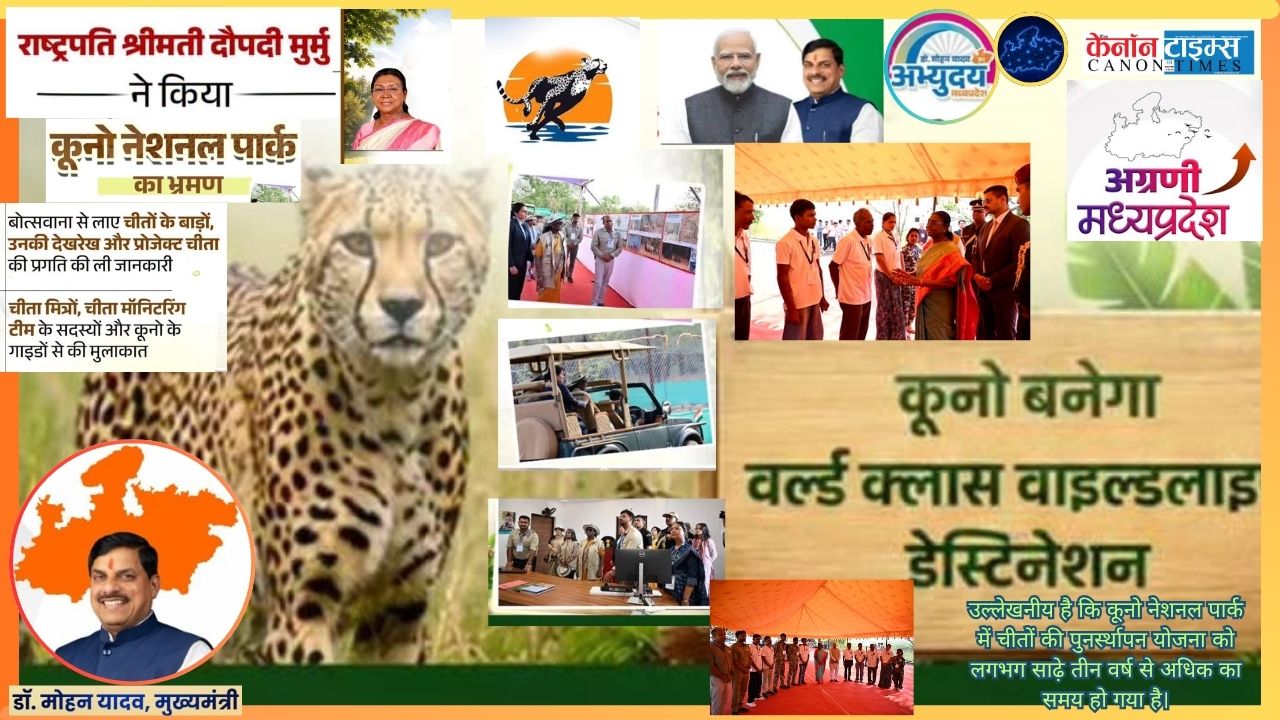
President Droupadi Murmu’s meeting with Cheetah Mitras at Kuno National Park is a welcome reminder that wildlife recovery is as much a social project as a scientific one. The restoration of cheetahs to Indian landscapes after decades of local extinction is already an ecological milestone.
Equally important is the human work that underpins it: the patient outreach, the village level awareness and the volunteers who translate policy into everyday protection. The President’s gestures of appreciation were therefore more than ceremonial; they recognized the invisible labour that keeps rewilding projects safe and legitimate.

Kuno’s cheetah project has matured beyond the simple narrative of translocation. It now rests on networks of local custodians who monitor movements, educate neighbours and provide the critical interface between forest authorities and rural communities.
That message came through in the discussions: Cheetah Mitras are present in every village adjoining the park, they inform people about cheetah behaviour, and they advise immediate reporting to forest officials should a cheetah appear near fields or habitations. Such grassroots engagement reduces fear, prevents retaliatory responses and builds consent for conservation in places where livelihoods come first.
The results so far are encouraging. The steady growth in cheetah numbers, including the rising count of cubs born in India, suggests that ecological conditions and protection protocols are working. But success is not automatic; it requires sustained investment in both biology and social systems. Tracking collars and veterinary care must be matched by continued community outreach, compensation mechanisms for any losses, livelihood support that reduces conflict drivers, and transparent communication so that local people see tangible benefits from conservation.
There is also a larger lesson about stewardship. Reintroductions transplant not just animals but responsibilities. When a top predator reappears in a landscape, human attitudes and institutions must adapt. Training and recognizing local volunteers as Cheetah Mitras is a practical model: it creates local ownership, channels local knowledge into management, and widens the constituency for protection. The state’s role is to ensure these volunteers are supported, that reporting systems are quick and trusted, and that any incidents are resolved fairly and visibly.
Finally, the Kuno experience underscores the value of patience and humility in conservation. Ecological recoveries take years and sometimes decades. Celebratory milestones like translocations and births are important, but long term success will be measured by coexistence: by whether farmers, pastoralists and protected area managers can find routine, low‑conflict patterns of life with the cheetahs among them. The President’s engagement with Cheetah Mitras is a positive sign that India understands this reality. If policy continues to balance scientific rigor with community partnership, Kuno can become not only a stronghold for cheetahs but a replicable model for humane and durable wildlife restoration across the country.

Author: This news is edited by: Abhishek Verma, (Editor, CANON TIMES)
Authentic news.