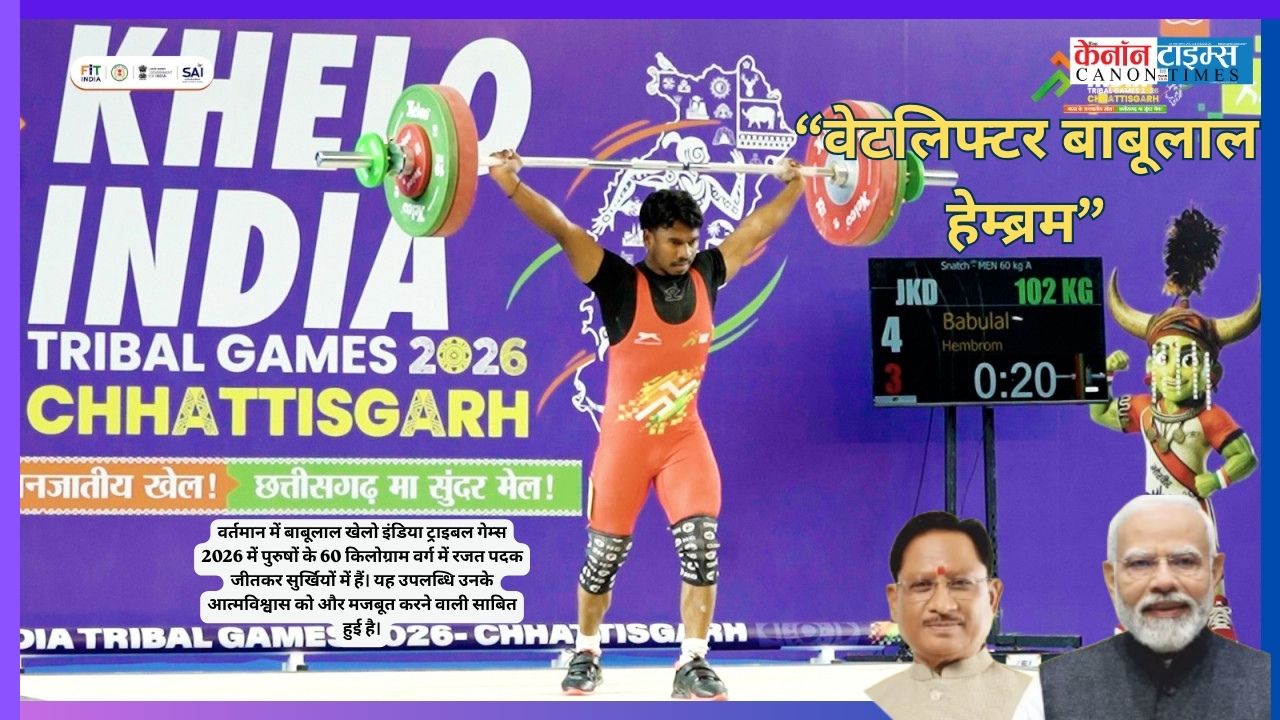
Babulal Hembram of Jharkhand is proof that medals can be earned not only in air conditioned gymnasiums but also on construction site floors, with bamboo sticks and iron rods as the first training equipment. The 19 year old weightlifter from Keriband village in Ramgarh district has already won gold at the Khelo India Youth Games, a Commonwealth Youth Weightlifting Championship title, and medals at global youth championships, all while coming from a family with little more than grit and determination to offer him. His story places a sharp question mark over the Indian sporting system (how many more Babulals remain invisible) because the state still treats rural talent as a bonus, not a priority.
Babulal’s journey did not begin in a state of the art academy. With his mother working as a school cook and his father dependent on casual labour, there was no room for imported gear or private coaching. Coached by Gurvinder Singh, he trained on makeshift bars at construction sites before moving to the Jharkhand State Sports Promotion Society, commuting nearly 60 kilometres daily just to reach structured training. That commute alone is a record of endurance the coaching manuals ignore, but life records loud and clear.
Later, in the 49 kg and 60 kg classes, Babulal translated that resilience into podium finishes at national and international youth events. A silver at the Khelo India Tribal Games 2026 is not just a personal achievement; it is a signal that the state’s modest investment in grassroots sports can yield national returns. Yet, the same signal is also a warning, without more rural gyms, better coaches, and logistical support, India will keep discovering talent too late, after athletes have already fought their way through constraints the system should have removed.
Babulal’s rise is not an exception to be celebrated once and forgotten, it is a model to be replicated. For policymakers, sports in tribal and rural belts must stop being an afterthought and become a core social mobility strategy. Corporates and media, too, must step beyond photo opportunities and offer long term support, equipment, nutrition, education plans and post career options, so that the next generation does not have to lift bamboo rods to discover their gift.
In the end, Babulal Hembram’s story is not just about weightlifting, it is about what India chooses to lift first, blind spots or athletes. The nation has a clear choice, build the infrastructure for the Babula’s yet to come, or keep calling their success inspirational while watching them struggle where they should only be excelling.

Author: This news is edited by: Abhishek Verma, (Editor, CANON TIMES)
Authentic news.