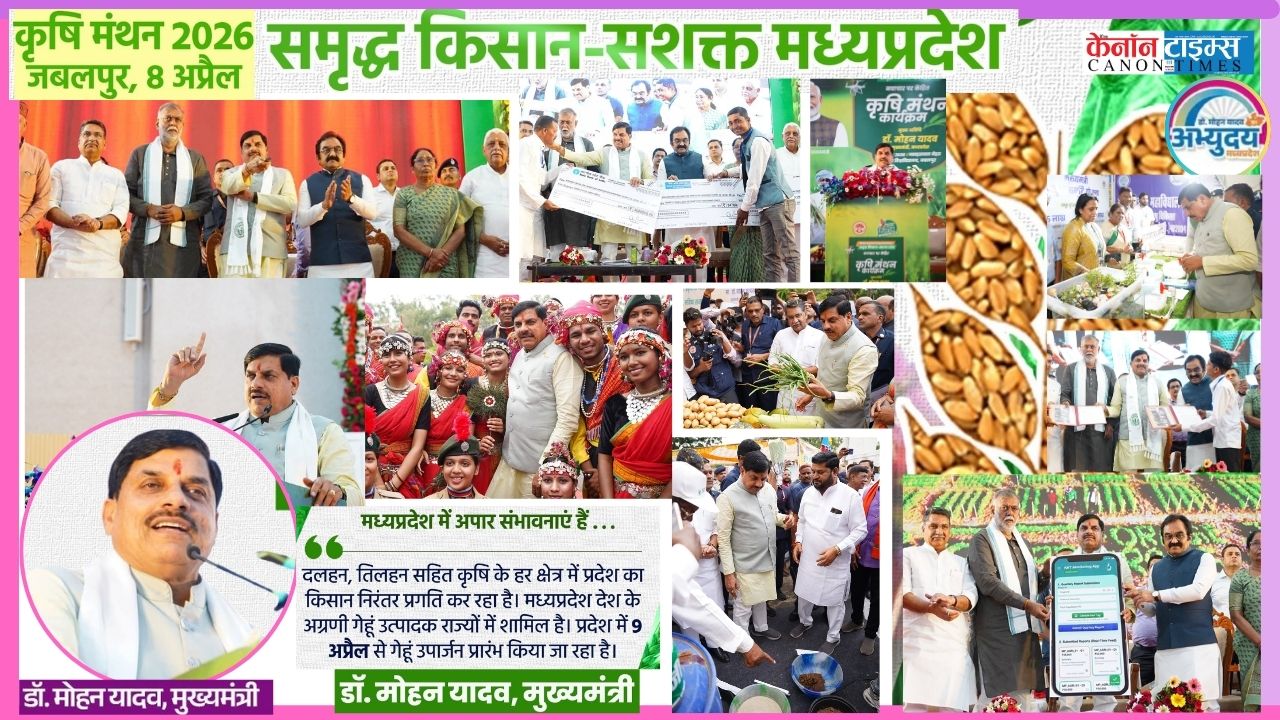
Agriculture has always been more than a source of livelihood in India. It represents a way of life, a cultural heritage, and the foundation of rural society. In Madhya Pradesh, this sentiment continues to guide policy and governance. The state government, under the leadership of Chief Minister Dr. Mohan Yadav, has emphasized that agriculture is not merely an economic activity but the central pillar of the state’s development and social fabric.
At a time when agriculture faces unprecedented challenges such as climate change, irregular rainfall, droughts, floods, declining soil fertility, and volatile markets, the need for innovation has become critical. These challenges require a new vision for farming that blends traditional wisdom with modern technology. The government has therefore focused on encouraging research, technological adoption, and sustainable farming practices to secure the future of farmers.

Over the past decade, India’s agricultural sector has witnessed a renewed momentum under the leadership of Prime Minister Narendra Modi. Efforts to increase farmer’s income, expand welfare schemes, and bring technology directly to the fields have created new opportunities in rural areas. Initiatives such as the “Drone Didi” program are enabling rural women to participate in modern agricultural practices, while agricultural extension workers are promoting organic farming, soil health management, and advanced cultivation techniques.
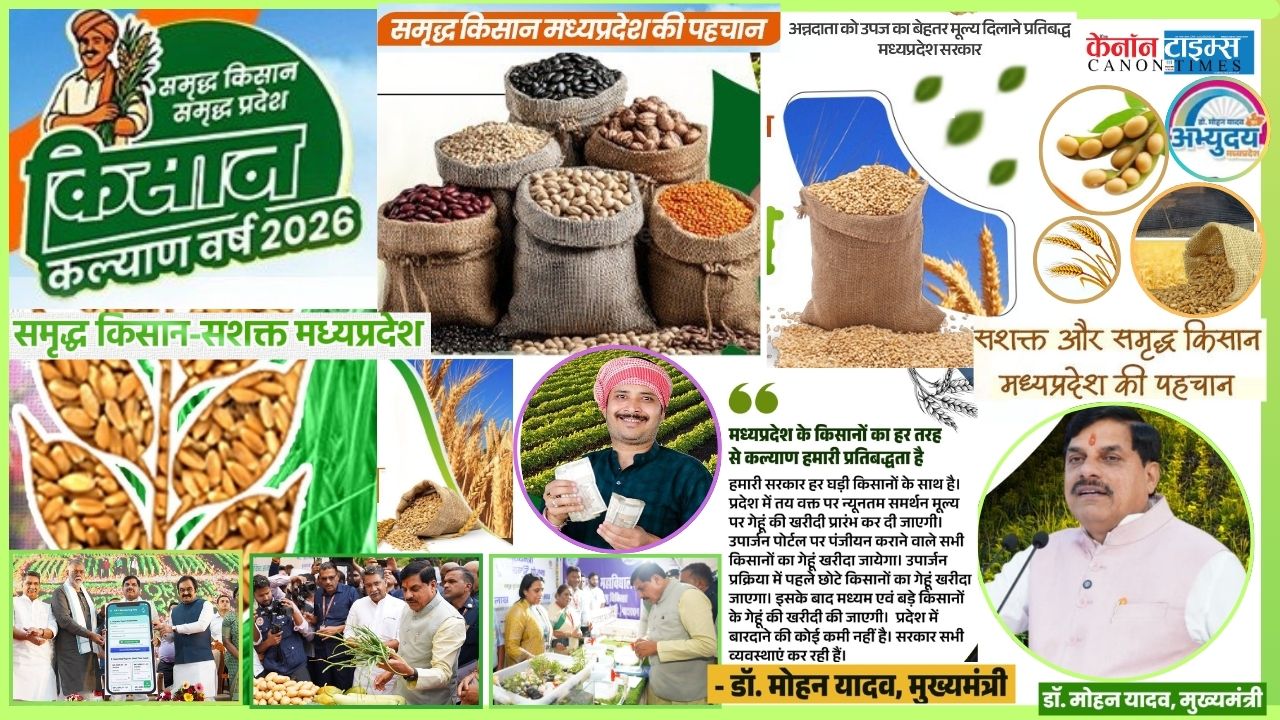
Recognizing the deeper philosophical importance of agriculture, the idea that “Krishi is the foundation of life” reflects the longstanding values of Indian society. In line with this vision, Madhya Pradesh has declared the year 2026 as a statewide agricultural celebration under the theme “Prosperous Farmers, Prosperous Madhya Pradesh.” The objective is to inspire farmers to adopt future ready agricultural practices and transform agriculture into a profitable, sustainable, and technology driven sector that generates employment.
Digital transformation is also playing a crucial role in modernizing agriculture. Through the Agri Stack initiative, the state is digitizing comprehensive farmer data, including land records, crop patterns, and production information. Madhya Pradesh has emerged as a leading state in implementing this initiative. By integrating farmer data digitally, government schemes can be delivered more efficiently and transparently. Farmers can also access real time information related to weather conditions, market prices, and crop management through mobile and online platforms.
However, technology alone cannot drive the agricultural transformation that India needs. Research and innovation must become the backbone of future agricultural growth. Building upon the spirit of the national slogan “Jai Jawan, Jai Kisan, Jai Vigyan,” there is a growing call to add “Jai Anusandhan,” emphasizing the importance of research in strengthening agriculture. Scientific farming methods, value addition to agricultural produce, improved market linkages, and crop diversification are key strategies being promoted to empower farmers economically.
The state government has also taken significant steps to promote organic and natural farming, reduce chemical dependency, and encourage environmentally sustainable practices. Scientific management of crop residues, modernization of agricultural markets, and integration with online trading platforms are helping farmers gain better access to markets. Additionally, efforts are underway to connect agriculture with tourism, creating new income opportunities for rural communities while introducing urban families to rural culture.
Another important area of focus is strengthening allied sectors such as dairy and food processing. The state has set an ambitious target to increase milk production from 9 percent to 20 percent through the Chief Minister Dairy Plus Program. Training programs through agricultural science centers are equipping farmers with improved seeds, modern techniques, and skill development opportunities. Satellite monitoring and drone surveys are also being used to track crop conditions and improve agricultural planning.
Food processing units, promotion of millets, and environmentally responsible practices such as crop residue management are further strengthening the agricultural ecosystem. Declaring 2026 as the “Year of Farmer Welfare” reflects the state’s commitment to ensuring holistic agricultural development through innovation, research, and technology.
In addition to policy reforms and technological interventions, several welfare initiatives are providing direct financial support to farmers. Programs such as the PM Kisan Samman Nidhi and the Mukhyamantri Kisan Kalyan Yojana are delivering financial assistance directly into farmer’s bank accounts. Minimum Support Price procurement ensures fair returns for crops, while the Kisan Credit Card scheme provides access to low interest credit. The Pradhan Mantri Fasal Bima Yojana offers protection against crop losses, providing crucial security to farmers during natural calamities.
The state has also introduced incentives such as bonuses on wheat procurement, financial support for paddy cultivation, MSP procurement of pulses, relief packages for disaster affected farmers, and interest free crop loans. Solar irrigation pumps under the PM Kusum scheme, free electricity for certain farmer categories, and affordable power connections further reduce the burden on rural households.
Beyond traditional crops, diversification into sectors such as floriculture is opening new economic opportunities. With around 44,000 hectares under flower cultivation, Madhya Pradesh is gradually expanding its presence in international markets. Similarly, the “One District One Product” initiative is promoting region specific agricultural products and supporting their marketing through financial assistance.
The path to agricultural prosperity lies in combining innovation, sustainability, and farmer centric policies. By embracing technology, encouraging research, strengthening rural infrastructure, and supporting farmers through welfare programs, Madhya Pradesh is attempting to build a resilient agricultural economy.
Ultimately, the prosperity of farmers determines the prosperity of the state. A forward looking agricultural strategy rooted in science, sustainability, and inclusivity will ensure that agriculture continues to remain the cultural and economic backbone of Madhya Pradesh for generations to come.

Author: This news is edited by: Abhishek Verma, (Editor, CANON TIMES)
Authentic news.