Mobility is more than movement; it is the ability to choose, to work and to participate in public life.
The Chief Minister Rural Bus Service in Chhattisgarh is proving that when transport reaches the last mile, it can reshape the gendered geography of opportunity. For women in far flung forest hamlets of Sukma and elsewhere, reliable buses have converted precarious journeys into safe commutes, and dependence into autonomy.
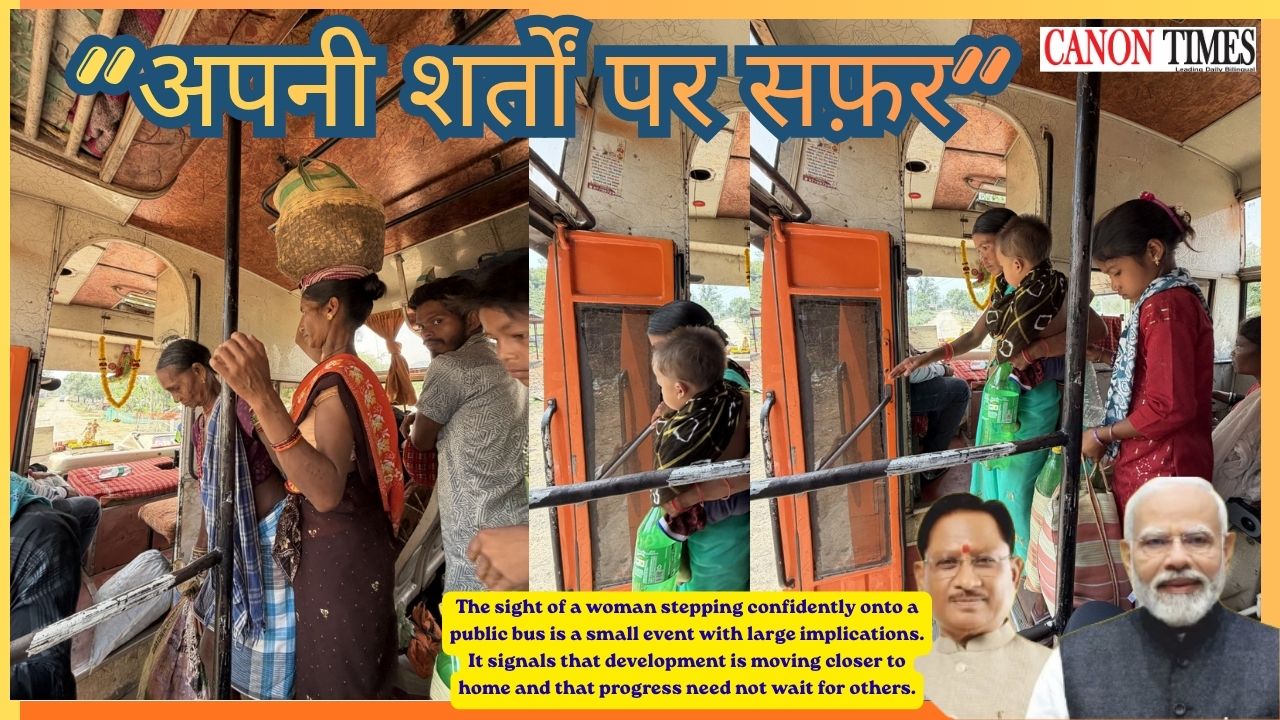
The simple image is powerful: a mother with an infant on her lap, a basket balanced on her head, traveling alone to the market or the clinic without fear or expense exploitation. That was uncommon until recently. Where transport was irregular, expensive or unsafe, women either stayed home or risked harassment and extortion.
Regular, state run rural buses change that calculus. They cut the role of informal middlemen, lower transaction costs, widen market access for local produce and enable timely healthcare and schooling access. When women can move safely and affordably, household economics change too; many now sell forest produce, vegetables or crafts in towns and bring cash into the home.
This is also a story about dignity. Paying her own fare, managing her errands, choosing when and where to travel these are acts of self respect that restore agency often eroded by isolation. The programme’s social returns are immediate: better access to services, improved incomes, reduced dependence and stronger participation in public life.
To turn this promising start into lasting transformation, three measures matter. First, ensure safety and reliability. Buses must run on schedule, drivers and staff must be sensitised to women’s security needs, and stops and shelters should be well lit and located near habitations. Second, integrate services. Align bus timings with market hours, health clinic schedules and school times; create designated spaces in buses for infants and elderly passengers; and maintain affordable fares with targeted subsidies where needed. Third, build sustainability and inclusion. Encourage women led cooperatives and SHGs to use transport for collective marketing, enable door to door feeder services in remotest hamlets and invest in data driven route planning so marginal areas are not left out.
The political will to extend mobility to rural women is commendable. But long term success will hinge on operational discipline and complementary policies that link transport with livelihood and safety. If the state treats rural buses as social infrastructure rather than one time welfare, the multiplier effects will accrue across health education, incomes and women’s public participation.
The sight of a woman stepping confidently onto a public bus is a small event with large implications. It signals that development is moving closer to home and that progress need not wait for others. The Chief Minister Rural Bus Service has offered more than transport; it has offered choice. The task now is to preserve that choice, expand it and turn it into enduring opportunity for every rural woman.

Author: This news is edited by: Abhishek Verma, (Editor, CANON TIMES)
Authentic news.