The Madhya Pradesh government’s assurances on outsourced staff, promotions and service benefits are welcome. The real test lies in implementing these commitments fairly, transparently and consistently across departments.
A government’s ability to deliver public services depends substantially on the people who work within its institutions. From schools and hospitals to local administration, government employees are the link between policy decisions and citizens’ everyday needs. Their job security, financial well-being and professional dignity therefore deserve serious attention.

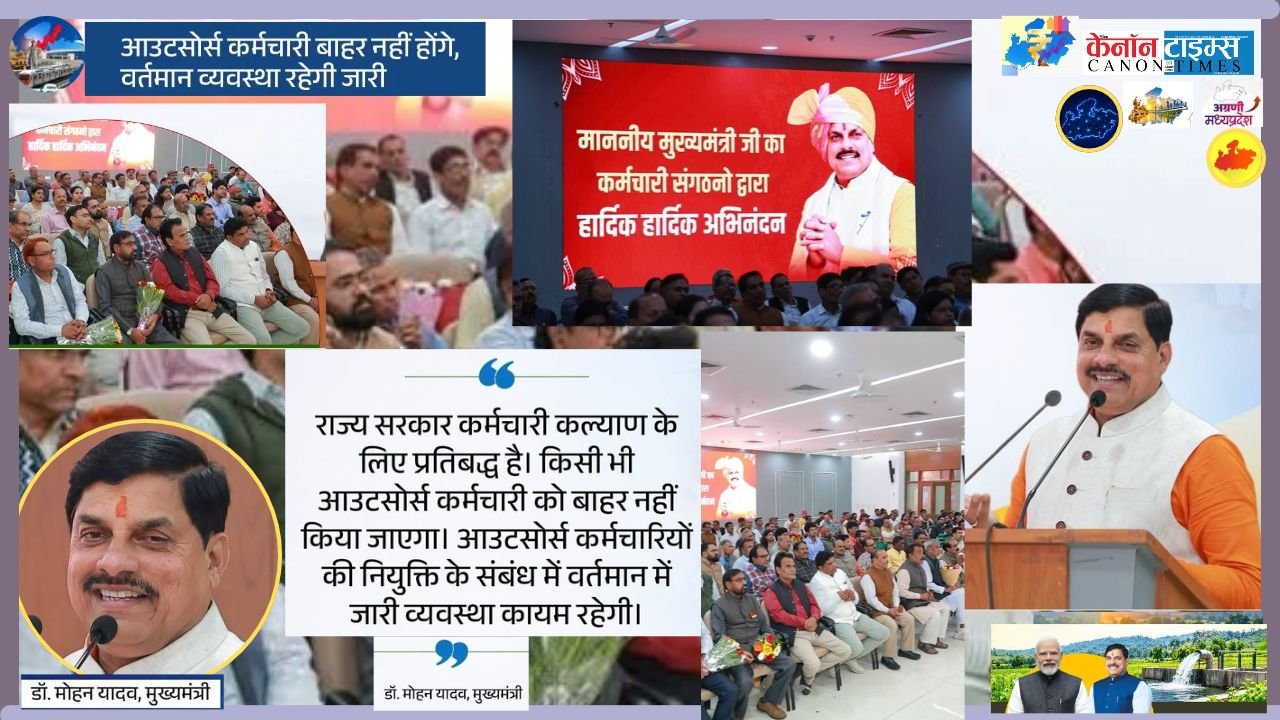
Chief Minister Dr Mohan Yadav’s assurance that no outsourced employees will be removed and that the existing system of their engagement will continue is important in this context. The clarification addresses concerns among workers about their future and underlines the need for stability in a workforce that supports essential public services. However, such assurances must be accompanied by clear departmental communication so that employees are not left uncertain about their status, contracts or working conditions.
The government’s reported decision to extend promotion benefits to more than one lakh officers and employees across departments is another significant development. Promotions can improve morale, recognise experience and create opportunities for younger personnel to take on greater responsibilities. The continuation of recruitment against vacant posts is equally important, particularly in departments where staff shortages affect service delivery.
The revision of around 26 categories of allowances, efforts to resolve pay anomalies and faster processing of compassionate appointments also deserve attention. Compassionate employment is especially important for families that suddenly lose their earning member. The reported appointment of more than 1,000 people in the School Education Department indicates the scale such measures can achieve when departments act with urgency.
The removal of the two-child limit policy for government employees is another decision welcomed by employee organisations. The relaxation of certain CPCT qualification requirements for promotion to posts equivalent to Assistant Grade-3, subject to conditions, also reflects an effort to address long-standing service-related concerns.
Yet employee welfare must extend beyond announcements and individual policy decisions. Outsourced workers, in particular, need clarity on wages, timely payments, social security, working hours and grievance redressal. Their contribution to public services should be recognised through fair and accountable employment practices. Similarly, promotion processes must remain transparent, merit-based and free from avoidable delays.
The establishment of the Madhya Pradesh State Employees Welfare Commission provides an institutional opportunity to examine grievances systematically. Its effectiveness will depend on regular consultation with employee organisations, time-bound recommendations and visible action by departments.
The government’s emphasis on treating employees as partners in development is sound. But a motivated workforce requires more than appreciation ceremonies. It needs predictable service conditions, financial security, professional development and a responsive administration. When employees are treated fairly and supported adequately, citizens are more likely to experience better public services. That should be the ultimate measure of employee welfare policy in Madhya Pradesh.

Author: This news is edited by: Abhishek Verma, (Editor, CANON TIMES)
Authentic news.