Ramkumar Kashyap’s experience shows how coordinated welfare schemes can transform the lives of low-income rural families. The real test is ensuring that every eligible household receives the same support.
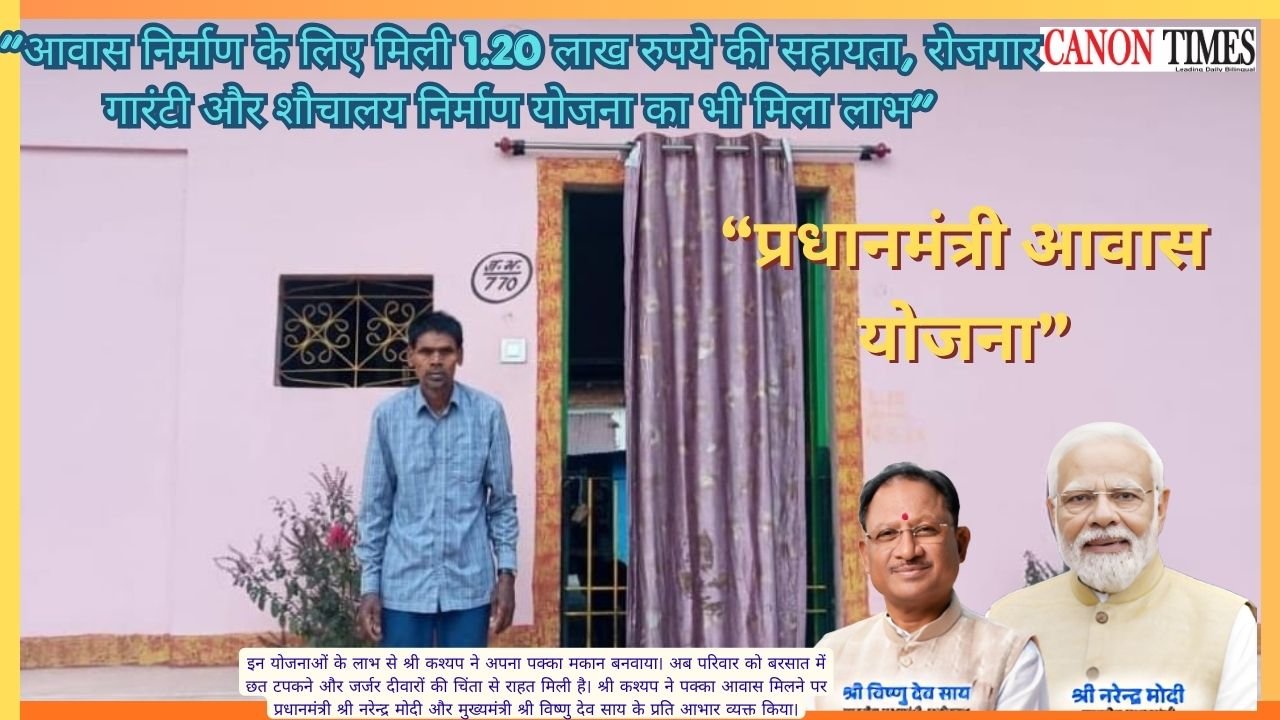
A safe and permanent home is more than a roof over one’s head. It offers security, dignity and stability, particularly for families living on uncertain incomes. The experience of Ramkumar Kashyap, a labourer from Pendri village in Chhattisgarh’s Janjgir-Champa district, illustrates how targeted government assistance can bring a meaningful change to everyday life.

For years, Kashyap and his family lived in a dilapidated mud house. During the monsoon, rainwater leaked through the roof, while damp walls and the deteriorating structure made living conditions difficult. Building a permanent house independently was beyond the family’s financial means.
Under the Pradhan Mantri Awas Yojana-Gramin, financial assistance of Rs 1.20 lakh was sanctioned to Kashyap in the financial year 2024-25. The amount was transferred directly to his bank account in instalments. The support was complemented by 90 days of wage employment under the employment guarantee scheme and Rs 12,000 for toilet construction under the Swachh Bharat Mission-Gramin. Together, these interventions helped the family build a permanent home.
The case highlights an important strength of rural welfare policy: different schemes can deliver greater impact when they work together. Housing assistance addresses the immediate need for shelter, wage employment helps support the construction process and sanitation funding improves household health and dignity. Such convergence makes public spending more meaningful than isolated benefits.
However, one successful household story should also prompt a broader question: how effectively are these schemes reaching every eligible family? Transparent beneficiary selection, timely release of instalments, quality construction and accessible grievance mechanisms are essential. Assistance must also be adequate in practice, since construction costs and local conditions can vary considerably.
A permanent house is only the beginning of a secure life. Families also need reliable drinking water, electricity, sanitation, roads, healthcare and livelihood opportunities. Rural development must therefore be measured not merely by the number of houses sanctioned or completed, but by whether people can live in them with comfort and security.
For Kashyap’s family, the relief from leaking roofs and unsafe walls is real and immediate. The larger lesson is that welfare schemes succeed when they translate government commitments into tangible improvements in people’s lives. Every family still living in an unsafe dwelling deserves the opportunity to experience that same security and dignity.

Author: This news is edited by: Abhishek Verma, (Editor, CANON TIMES)
Authentic news.