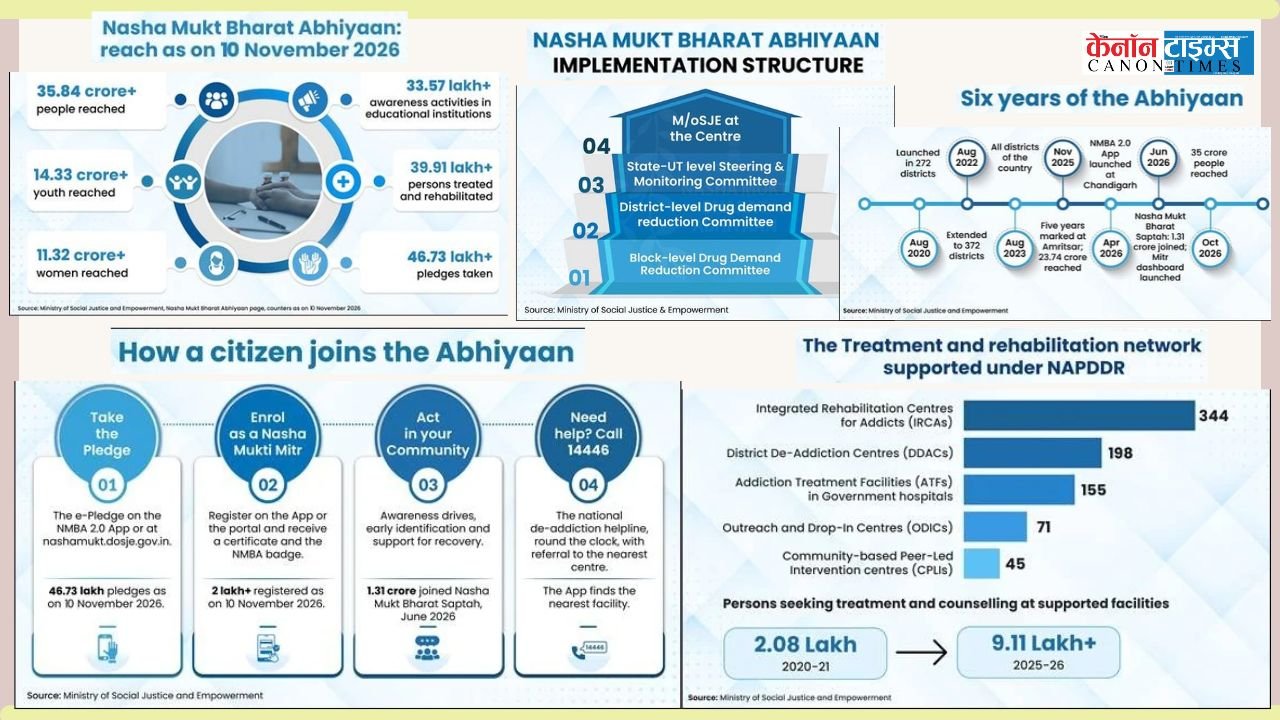
The fight against drug abuse is not merely a government responsibility but a collective social challenge. Substance abuse destroys individuals, weakens families and threatens the future of young generations. Against this backdrop, the six year journey of the Nasha Mukt Bharat Abhiyaan marks an important step towards building a healthier society.
Launched on August 15, 2020, in 272 vulnerable districts, the campaign has now expanded across the country. As of November 10, 2026, it has reached more than 35.84 crore people, including 14.33 crore youth and 11.32 crore women. Over two lakh citizens have also registered as Nasha Mukti Mitr, reflecting growing public participation.
These achievements are encouraging, particularly when viewed against the scale of the problem. A national survey conducted in 2018 estimated that more than seven crore people in India were affected by substance use disorders. Clearly, addiction is not simply a law and order issue. It is a serious medical, psychological and social problem requiring prevention, treatment and rehabilitation.
Awareness among young people must remain a priority. Educational institutions, families and community organisations have an important role in protecting children from peer pressure and addictive substances. The participation of women, teachers, local bodies and youth volunteers can make the campaign more effective at the grassroots level.
However, awareness campaigns alone cannot achieve a drug free society. Accessible treatment centres, trained professionals, counselling facilities and sustained rehabilitation are equally essential. The increase in people seeking treatment and counselling, from 2.08 lakh in 2020 to more than 9.11 lakh in 2025 to 2026, indicates growing awareness and access to support. Yet the challenge remains substantial.
Equally important is the need to remove the stigma associated with addiction. People struggling with substance dependence should be encouraged to seek treatment rather than face social rejection. Recovery requires medical care, family support and opportunities for employment and social reintegration. Without these, the risk of relapse remains high.
The proposed monitoring committees at State, district and block levels can strengthen implementation, provided they function regularly and remain accountable. The national de addiction helpline 14446 and the NMBA 2.0 application are useful initiatives, but their benefits must reach remote and vulnerable communities as well.
Six years of the Nasha Mukt Bharat Abhiyaan have created a strong foundation. But the success of this movement must not be measured merely by the number of people reached or pledges taken. Its real success will lie in preventing addiction, ensuring effective treatment and restoring dignity to those who have recovered.
A Nasha Mukt Bharat cannot be achieved through government efforts alone. It requires collective commitment from families, educational institutions, communities and public authorities. The campaign must now move beyond awareness and deliver measurable change in people’s lives.

Author: This news is edited by: Abhishek Verma, (Editor, CANON TIMES)
Authentic news.