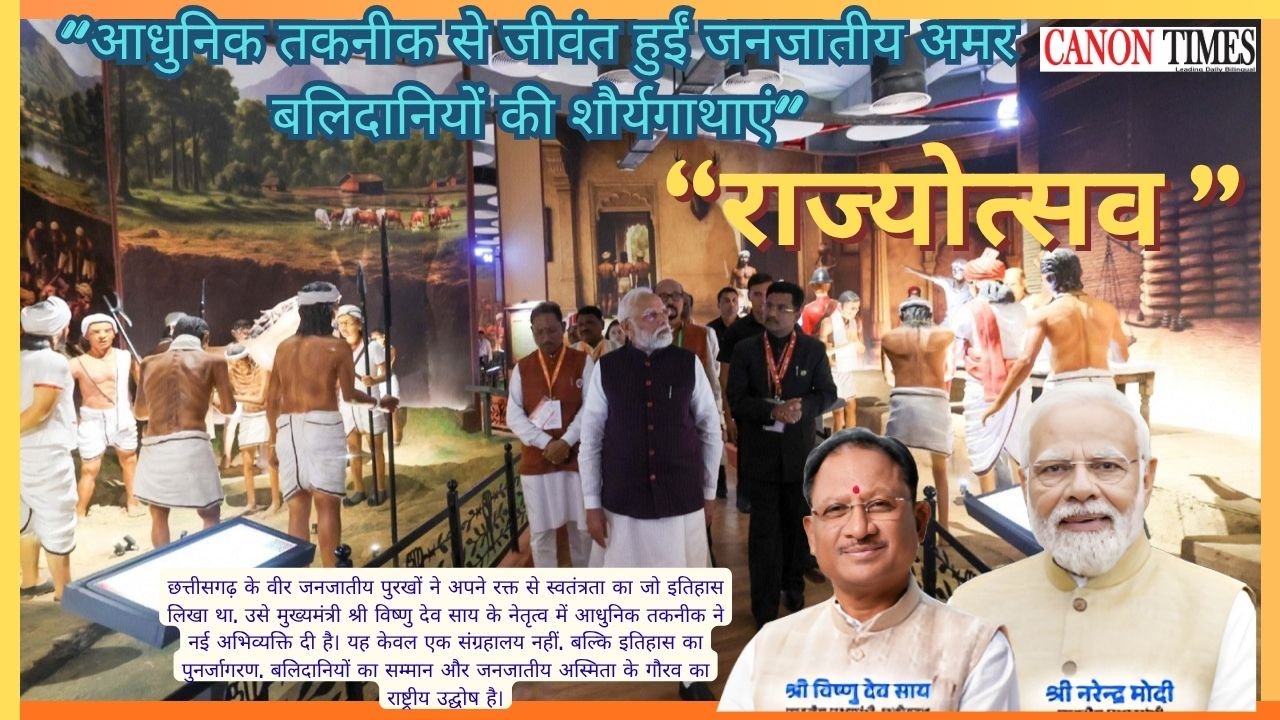
History becomes meaningful when it is remembered honestly and shared widely. The Shaheed Veer Narayan Singh Memorial and Tribal Freedom Fighters Museum in Nava Raipur does exactly that. Built at a cost of about 50 to 55 crore Rupees and dedicated to the nation by Prime Minister Narendra Modi on 1 November 2025, it brings the stories of tribal resistance and sacrifice before a wider audience.
The museum uses more than 650 life-like sculptures, digital projections, audio-visual presentations and VFX technology to present events such as the Halba, Surguja, Bhopalpatnam, Paralkot, Tarapur, Lingagiri, Koi, Meria, Muria, Rani Chauris, Bhumkal and Sonakhan uprisings. It also includes galleries on the Flag Satyagraha and Jungle Satyagraha. Through these displays, visitors can understand that India’s freedom struggle was shaped not only in cities but also in forests and remote tribal regions.
The museum’s strength lies in making history accessible. Digital boards and QR codes allow visitors to learn more about specific events, while trained guides explain the context of tribal revolts and the contribution of freedom fighters. This combination of traditional storytelling and modern technology can help young people connect with the past in a more engaging way.
The memorial honours Veer Narayan Singh, a martyr of the 1857 First War of Independence, along with many other tribal fighters. Their struggles were not only against colonial rule; they were also struggles for justice, dignity and the rights of jal, jungle and zameen. Remembering them is important because their contribution has often received less attention in mainstream historical narratives.
The museum is also becoming a centre for education and tourism. More than three lakh visitors have visited since its inauguration, with daily footfall ranging from one to two thousand on normal days and four to five thousand on holidays. Increased visitor interest can support local employment, tourism services and cultural exchange, provided the site is maintained well and remains accessible to all.
Facilities such as drinking water, parking, CCTV security, first aid, wheelchairs for persons with disabilities and a childcare room show attention to visitor needs. Such arrangements are essential if the museum is to serve families, students, senior citizens and tourists comfortably.
A memorial gains value when it inspires reflection. This museum reminds visitors that freedom was earned through sacrifice across many regions and communities. By preserving tribal history and presenting it through modern means, Chhattisgarh has created a space where the past can inform the present and inspire future generations.

Author: This news is edited by: Abhishek Verma, (Editor, CANON TIMES)
Authentic news.