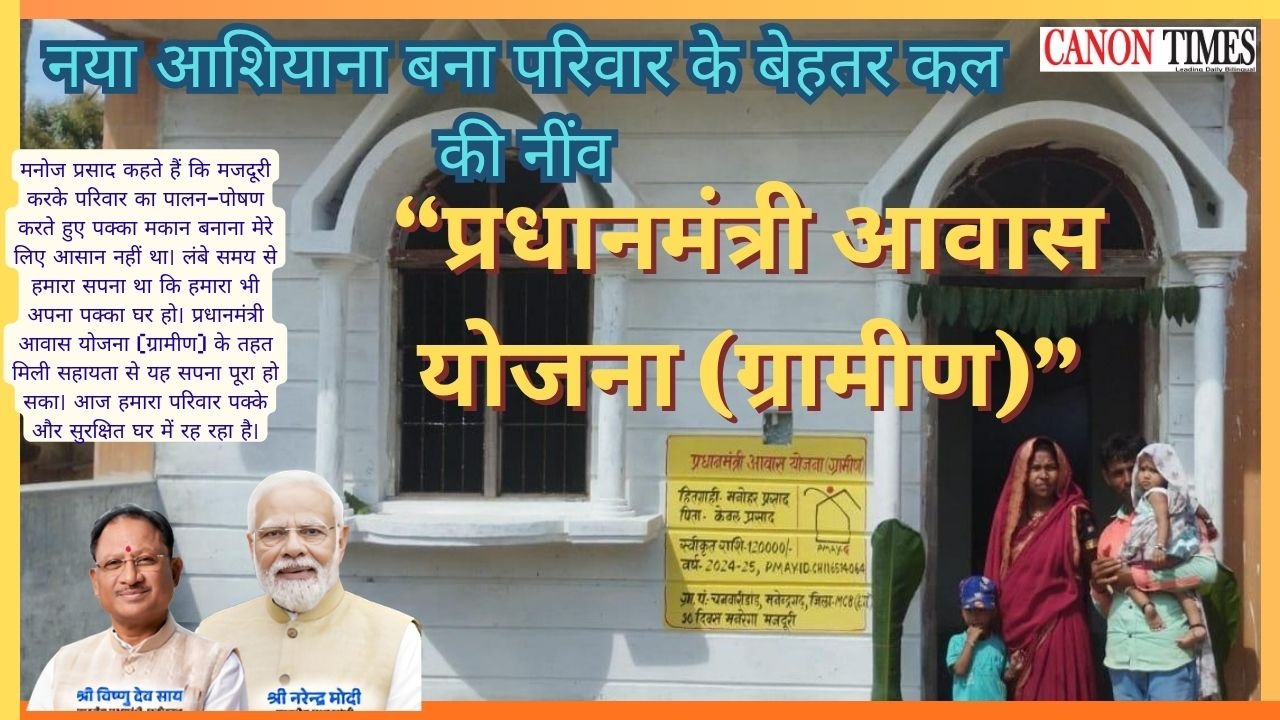
Manoj Prasad of Chanwaridand village once lived with his family in a kuccha house made of mud and tiles. Rain brought leaks and worry. Every season added to the strain. His income from daily wage labour was enough for food and essentials, but not for a pucca home. In 2024 to 25, he received approval under the Pradhan Mantri Awas Yojana Gramin. Over three instalments, he got 1.20 lakh rupees. With that support and his own labour, he built a pucca house. The leaks stopped. The fear eased. The family now lives with security and dignity. For them, this is not just a building. It is a foundation for a better future.
This is more than a construction story. It is a reminder that shelter sits at the base of human capability. When rain does not enter a room, a child can study without panic. When a floor stays dry, grain can be stored without loss. When a door locks with confidence, a family sleeps without worry. These small gains add up. They reduce stress. They protect assets. They make planning possible. That is why housing schemes matter beyond the headline of units built. They change the rhythm of daily life.

Why does this matter at scale. India’s rural housing push has moved millions from kuccha to pucca dwellings. The effect is visible in health, education and women’s safety. It is visible in reduced disaster risk when floods or storms hit. It is visible in the willingness of families to invest in their own homes once the base is secure. In Chhattisgarh, the Panchayat and Rural Development Department has emphasised service and welfare as a governing priority. A pucca house for a poor family is one of the most direct ways to deliver on that promise.
The real test will be quality and convergence. Will houses be built to withstand local weather and last for decades. Will water, sanitation and electricity connections keep pace so that a house becomes a home. Will the most vulnerable, including women headed households and tribal families, be prioritised without delay or leakage. Will maintenance support and disaster proofing be part of the design so that a roof does not become a liability in the next heavy rain. And will housing be linked to livelihoods, schools and clinics so that families do not just have shelter, but opportunity nearby.
For Manoj, the change is personal and profound. He thanks the state government and Prime Minister Narendra Modi for a scheme that turned anxiety into assurance. His story is one among millions. But it carries a universal lesson. When the state delivers a safe home, it does more than count units. It restores trust and opens doors. That is the true measure of this push: not just the houses completed, but the childhoods protected and the futures enabled.

Author: This news is edited by: Abhishek Verma, (Editor, CANON TIMES)
Authentic news.