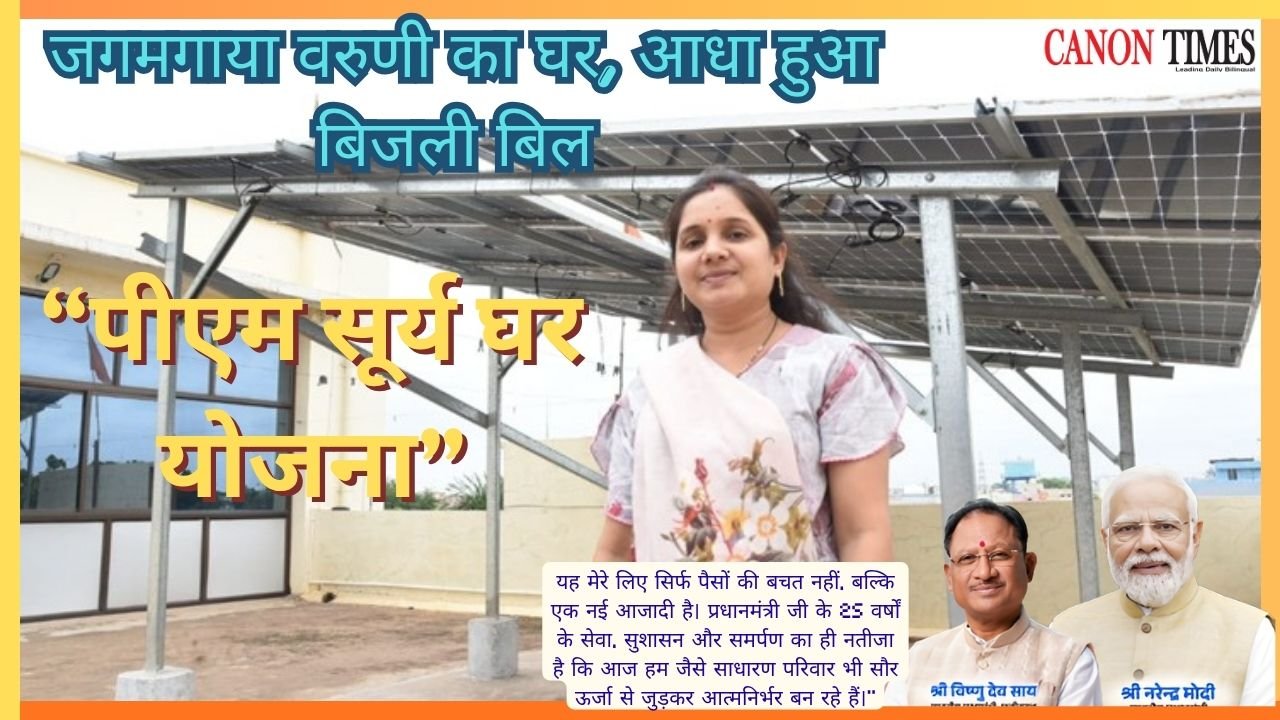
Varuni Sahu of Dhanora village in Durg district once faced a monthly worry that many Indian households know well. A large family meant a large electricity bill. The burden ate into the budget and left little room for other needs. Then she joined the Pradhan Mantri Surya Ghar Muft Bijli Yojana. In January 2025, solar panels were installed on her roof at a cost of 2.50 lakh rupees. She received a subsidy of 78,000 rupees. The system now generates about 1,283 units against a consumption of 2,662 units. Her grid bill has been cut by nearly half. She pays only for the remaining 1,379 units. For her, this is not just savings. It is a sense of freedom and a step toward self reliance.
This is more than a subsidy story. It is a model that turns consumers into prosumers. A rooftop solar system lowers monthly outgo and shields a household from tariff hikes. It reduces peak load on the distribution network. It cuts carbon emissions without asking families to change their lifestyle. When thousands of homes do the same, the aggregate effect is significant. Discoms face lower losses. The grid becomes more resilient. Air quality improves as fossil fuel generation eases. For a state like Chhattisgarh, with strong solar potential and a push for service and welfare under Chief Minister Vishnu Deo Sai, the scheme fits a larger narrative of empowerment and sustainability.

Why does this matter at scale. Energy is a backbone of household capability. When a bill shrinks, money is freed for nutrition, education or health. When a roof produces power, a family gains control over a basic cost. When a scheme is simple and subsidised, adoption rises. The Surya Ghar plan aims to bring solar to millions of homes. Varuni’s experience shows how it can work on the ground. Clear information, timely subsidy and reliable installation turn a policy into a personal gain. The message spreads. Neighbours see the meter run slower. They ask questions. They sign up.
The real test will be execution and aftercare. Will subsidies be credited fast so that payback periods stay short. Will vendors be empanelled and monitored so that quality does not vary. Will net metering work smoothly so that households get fair credit for surplus power. Will maintenance support be available so that panels perform for years, not just months. And will the scheme reach the most vulnerable, including women headed households and rural families, without complex paperwork. If these pieces fall into place, rooftop solar can become a quiet revolution in household economics and environmental health.
For Varuni, the change is tangible and personal. Her roof now works for her. Her bill is lighter. Her confidence is higher. That is the true measure of this push: not just the units generated, but the burdens reduced and the choices expanded.

Author: This news is edited by: Abhishek Verma, (Editor, CANON TIMES)
Authentic news.