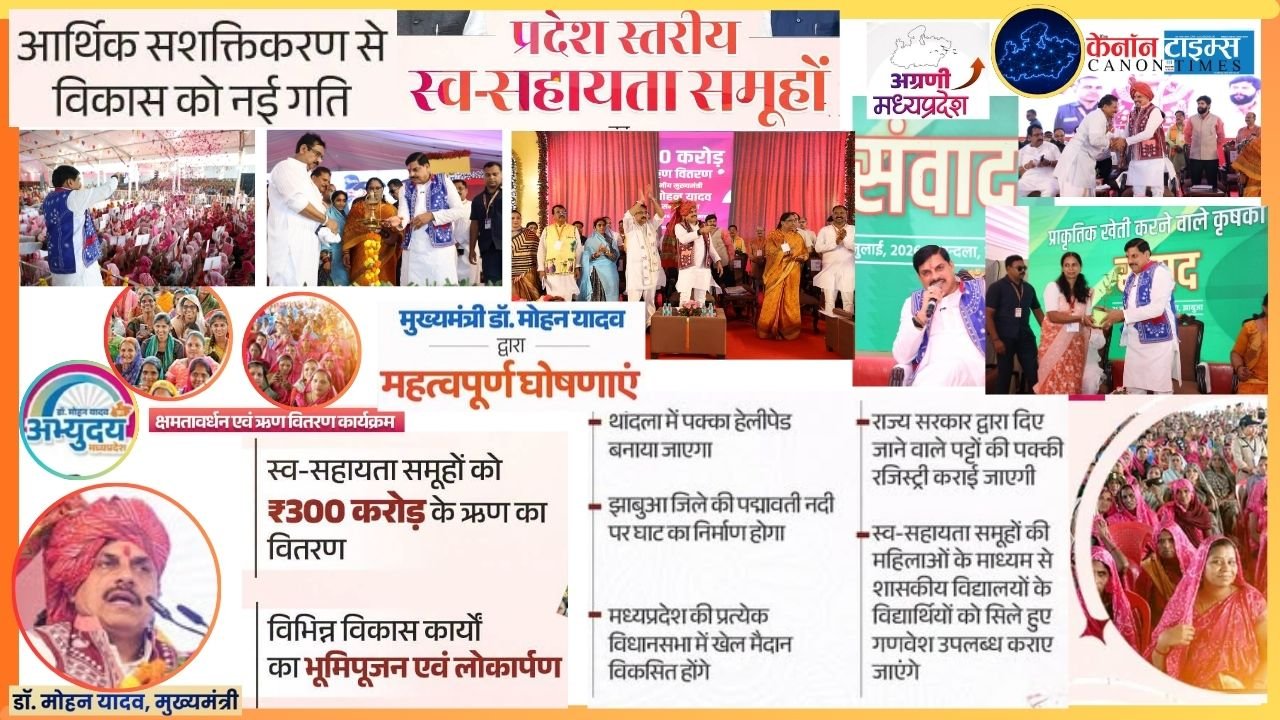
Madhya Pradesh is demonstrating a simple but powerful truth: when women are empowered, entire communities prosper. Chief Minister Dr Mohan Yadav’s recent address in Jhabua, where 300 crore Rupees in loans were distributed to self-help groups, was not merely a routine government function. It was a statement of intent about the kind of development model the state is pursuing, one that places women at the centre of economic and social transformation.
The numbers speak for themselves. Self help group sisters in Madhya Pradesh are now earning up to 10,000 Rupees per month. The state operates 196 Didi Cafes, 85 Ajeevika libraries, and women are engaged in over 150 non-agriculture activities. In Jhabua alone, more than 11,900 self-help groups are supporting over 1.56 lakh families. Women Farmer Producer Organisations have conducted business worth 958 crore Rupees. These are not welfare statistics; they are indicators of an economic revolution driven by women who were once confined to the margins of household economies.
What makes this approach particularly significant is its multiplier effect. When a woman earns, she invests in her children’s education, her family’s health, and her community’s future. The Chief Minister’s announcement that school children will receive stitched dresses through self-help groups from next year is a case in point. It creates a virtuous cycle: women gain employment, children receive uniforms, and local tailoring enterprises flourish. This is development that sustains itself.
The focus on natural farming and agricultural innovation further strengthens this model. Women are now operating tractors and drones, spraying pesticides as Drone Didis, and leading wheat procurement efforts that saw Madhya Pradesh purchase 104 lakh metric tons, the highest in the country. The image of women piloting drones over fields is a far cry from traditional perceptions of rural women’s roles. It signals a fundamental shift in who gets to participate in the modern economy.
Equally important is the emphasis on employment generation that prevents migration. The announcement of a new communication sector unit in Gwalior creating 14,000 jobs, and the Prime Minister’s Mitra Park in Dhar expected to benefit 3 lakh people, addresses a chronic problem in tribal and rural areas. When young people can find work near home, families stay together, communities remain intact, and local economies grow. The promise that people from Jhabua, Dhar and Alirajpur will no longer need to migrate for work is perhaps one of the most meaningful commitments a government can make.
The infrastructure announcements, from an Ayurvedic Medical College to railway connectivity in Thandla, sports stadiums in every assembly constituency, and ghats on the Padmavati River, round out a comprehensive development package. But what ties these diverse initiatives together is the underlying philosophy: development must be inclusive, employment-oriented, and women-centric to be truly transformative.
There are challenges ahead. Ensuring that loans translate into sustainable enterprises, that training leads to lasting employment, and that women’s participation in the economy is matched by their voice in decision making will require continued political will and administrative efficiency. The reservation of 50 per cent seats in urban bodies and panchayats for women is a strong foundation, but representation must translate into real influence.
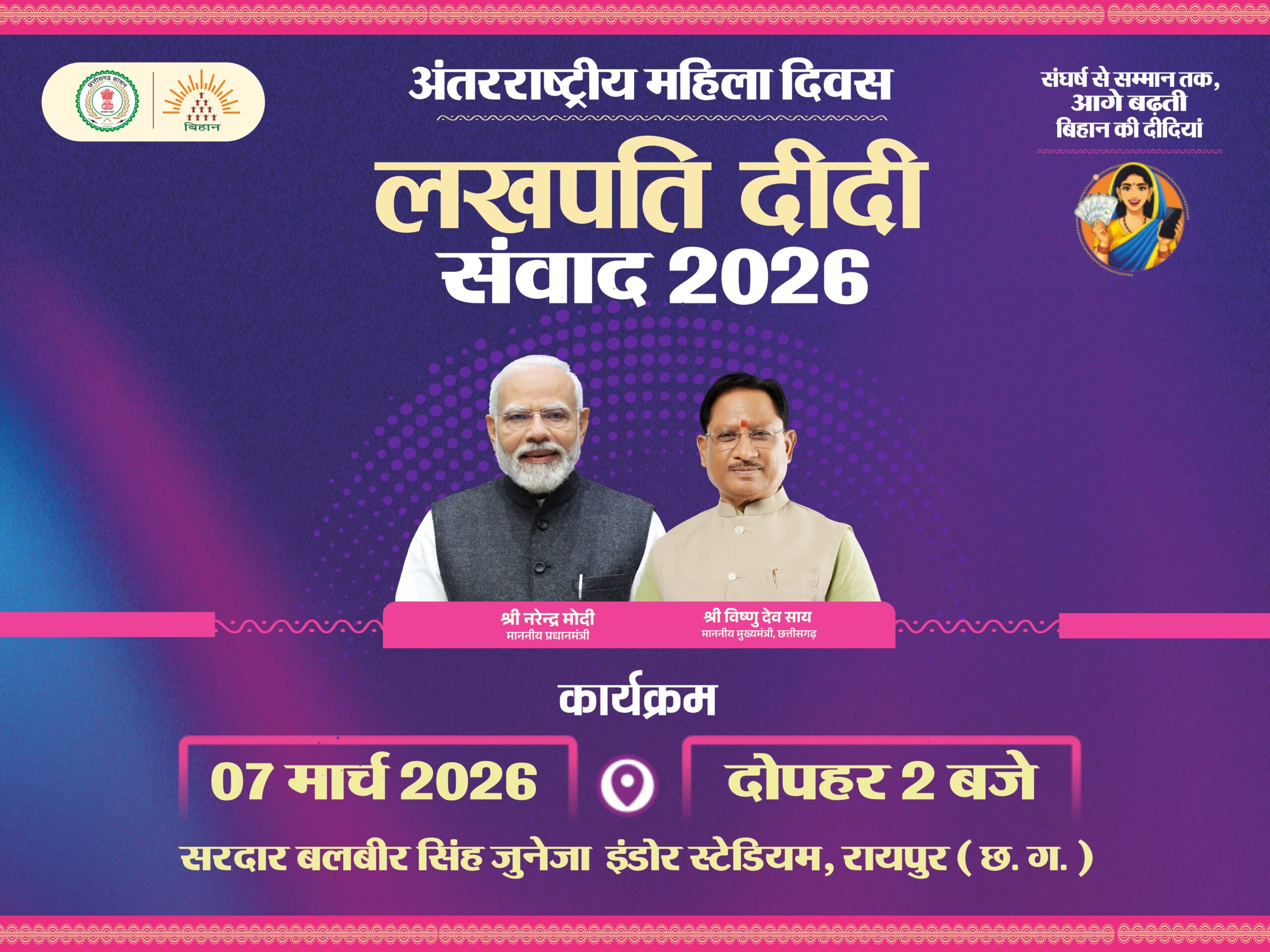
Madhya Pradesh’s experiment with women-led development offers lessons for other states. The combination of financial access through self-help groups, skill development in emerging sectors like drone technology, and market linkages through producer organisations creates an ecosystem where women can thrive as entrepreneurs rather than remain as wage labourers. The 64,000 Lakhpati Didi’s in tribal areas are proof that this model works.
When a Chief Minister says that the state is moving forward on the strength and blessings of its sisters, it should not be dismissed as political rhetoric. In Madhya Pradesh, it is becoming a development reality. The question for other states is not whether they can afford to replicate this model, but whether they can afford not to.

Author: This news is edited by: Abhishek Verma, (Editor, CANON TIMES)
Authentic news.