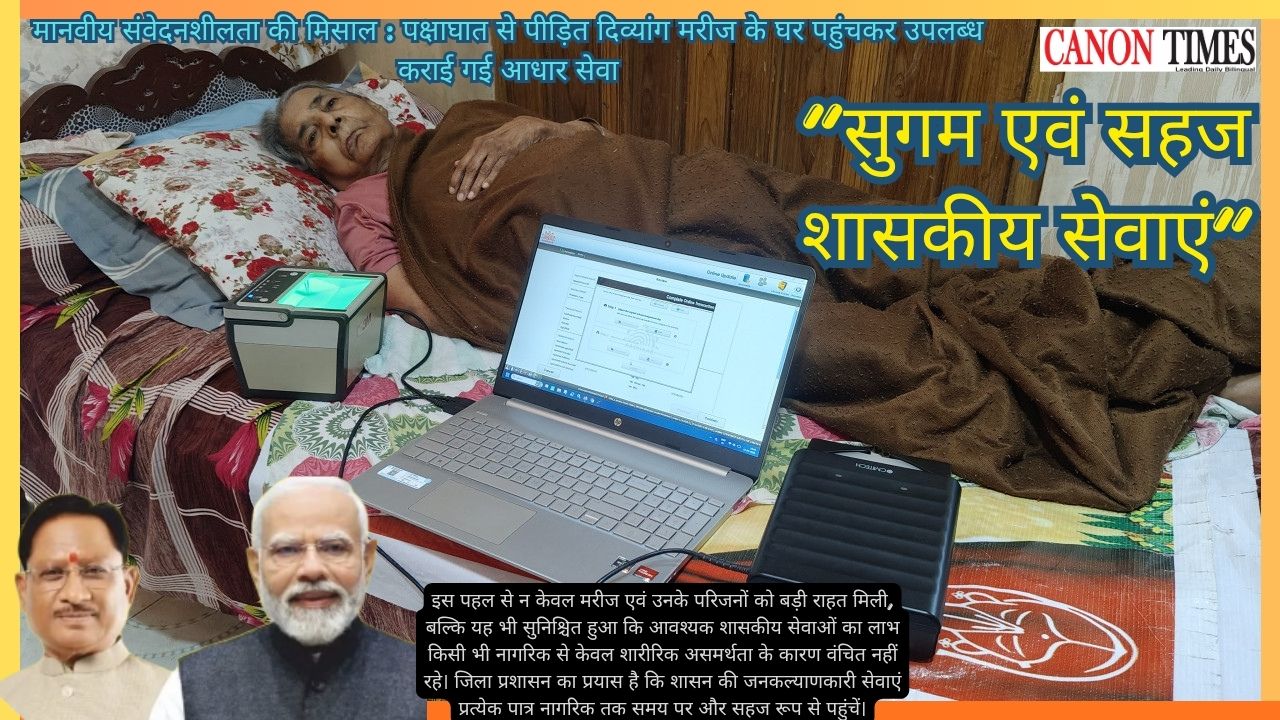
The home delivery of Aadhaar-related service to a paralysis patient in Marwahi is a moving example of governance with a human face. It shows that public service becomes truly meaningful when it reaches people who cannot reach the system on their own.
This initiative matters because it recognizes a simple truth: disability, illness or old age should never become a barrier to basic services. By going to the patient’s home and completing the required process there, the administration turned convenience into dignity and compassion into action.

Such gestures may appear small, but their public value is large. They reassure citizens that the state is not only procedural, but also responsive to real-life hardship. For families dealing with serious illness, even one accessible service can reduce stress and restore trust.
The strongest message from this episode is that good governance is not measured only by schemes and announcements. It is measured by whether the weakest and most vulnerable people can actually benefit from them. In that sense, this was not just an Aadhaar service, but a reminder that sensitive administration can make a real difference in someone’s life.

Author: This news is edited by: Abhishek Verma, (Editor, CANON TIMES)
Authentic news.