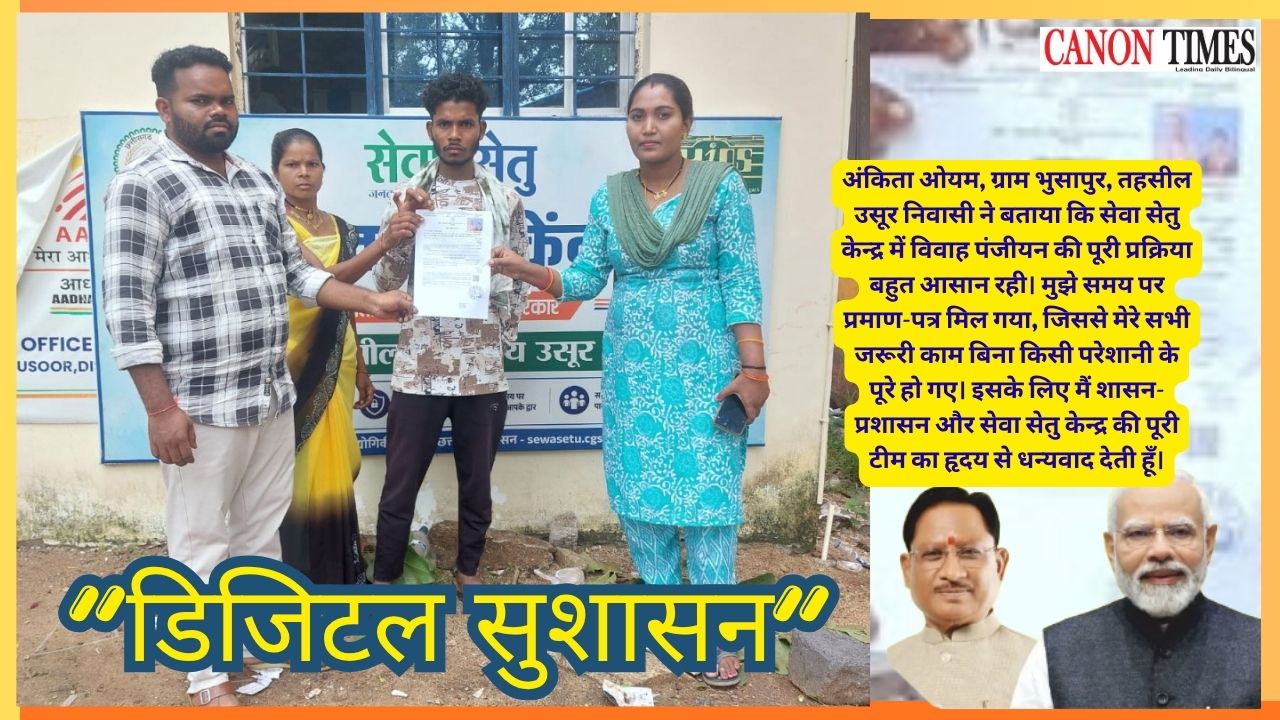
The Service Setu initiative in Chhattisgarh is a practical example of how digital governance can make public services simpler, faster and more trustworthy. For rural citizens like Ankita Oyam in Bijapur, the ability to obtain a marriage registration certificate on time without repeated visits to government offices is not a small convenience. It is a meaningful improvement in how the state reaches ordinary people.
What makes this initiative important is its direct impact on everyday problems. In many rural areas, getting certificates such as income, caste, residence or marriage registration often involves delays, travel costs and repeated follow-up. When a single centre can handle the process transparently and on time, it reduces both administrative burden and citizen frustration. That is the real promise of digital governance: not just computerisation, but better service delivery.

Ankita’s experience also shows how much value citizens place on time-bound and local access. Earlier, such work often required visiting multiple offices and spending extra time and money. With Service Setu, the process became easier, more predictable and less stressful. For families in remote areas, that kind of reliability matters because government paperwork is often linked to other important life events and responsibilities. A delayed certificate can hold up many other decisions.
The broader significance of this model lies in trust. When people receive a document without unnecessary delay or repeated visits, their faith in the administration improves. That trust is essential for any public system, especially in rural and tribal regions where citizens may already feel distant from government institutions. A service centre that works efficiently can help close that gap.
There is also a larger lesson for governance across the country. Digital systems should not be treated as ends in themselves. Their true value lies in whether they simplify the lives of citizens, reduce corruption opportunities and create transparent, accountable delivery. Service Setu appears to do exactly that by bringing key services closer to the village level and making the process more citizen-friendly.
The success of such initiatives will depend on consistency. If service centres continue to function smoothly, keep timelines predictable and remain accessible to ordinary people, they can become one of the strongest tools of public administration. Ankita Oyam’s experience is a reminder that good governance is often measured not by grand announcements, but by whether a citizen gets a needed certificate without difficulty.

Author: This news is edited by: Abhishek Verma, (Editor, CANON TIMES)
Authentic news.