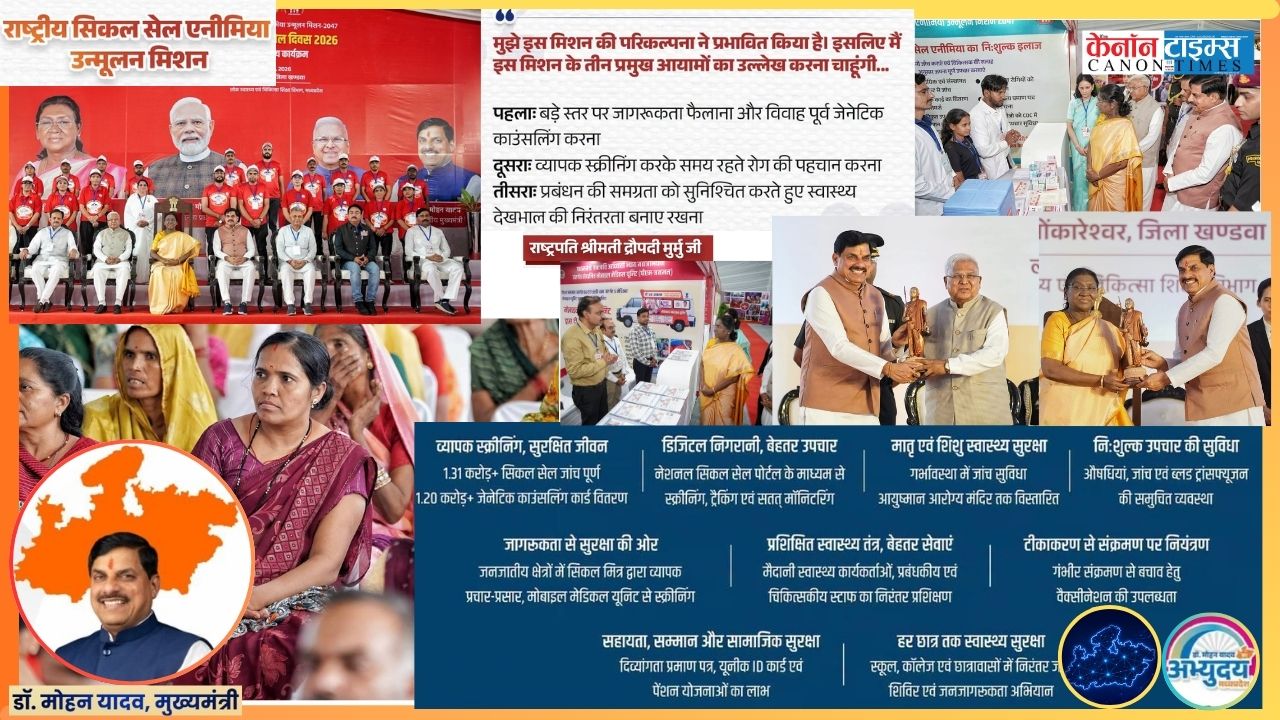
The scale and speed of India’s Sickle Cell Anemia Elimination Mission are remarkable, and Madhya Pradesh’s contribution stands out. That the national programme has screened millions well ahead of schedule is no small feat.
The state’s record of over 1.32 crore screenings, wide distribution of genetic counselling cards, expansion of point of care testing and community mobilisation through “Sickle Mitra” volunteers are the tangible signs of a mission that has moved from plan to practice. Praise from the President and public recognition help sustain momentum.

Yet the true test will be whether these early wins translate into durable prevention, reliable treatment and intergenerational change.
Three realities should guide the next phase. First, screening alone is only the opening act. Identifying carriers and patients is essential, but it must be followed by accessible lifelong care, counselling and proven preventive measures.
That means strengthening primary health centres, ensuring reliable supply chains for diagnostics and medicines, and integrating sickle cell services into routine maternal and child health platforms so pregnant women and newborns receive timely attention.
Second, counselling must be meaningful and culturally sensitive. In tribal and remote communities where the gene burden is high, genetic information intersects with deeply held social practices. Digital genetic cards and pre marriage matching can be useful tools, but they must be offered with empathetic counselling that explains risk without stigma, respects local customs and supports informed decisions. Investing in trained counsellors drawn from local communities will pay dividends.
Third, mission mode must evolve into sustainable systems. Mobile medical units and mass screening campaigns proved effective for rapid coverage; now the focus must shift to continuity follow up of identified cases, routine monitoring, newborn screening integrated into child health, and data systems that track outcomes, not just tests done.
The proposed cyber enabled tracking and expansion of testing to Ayushman Arogya Mandir level are promising steps; they should be accompanied by transparent reporting of treatment uptake, morbidity reductions and survival outcomes.
There is also a policy imperative to align prevention with livelihoods and social support. Families caring for sick children face economic and social strain. Linkages with nutrition programmes, educational support, disability allowances where needed and transport assistance for specialist referrals will make medical gains sustainable. Research and capacity building matter too. Madhya Pradesh should scale training for primary care providers in sickle care protocols, expand newborn screening laboratories, and partner with research institutions to refine context appropriate therapies and preventive strategies.
Finally, the mission’s success hinges on avoiding stigma and ensuring inclusion. Public campaigns should normalise testing, highlight stories of care and resilience, and emphasise that carrier status is a health attribute not a moral failing. Community leaders, tribal institutions and women’s groups must be partners in messaging and service delivery so uptake and trust rise in tandem.
Madhya Pradesh has shown what concerted state action can achieve within a national mission. Now the challenge is consolidation. Move from numerical targets to measurable health outcomes. Ensure counselling is humane and effective. Convert screening into continuous care pathways and social supports so identified families do not fall through the cracks. If the state sustains political will and channels it into systems and services, the mission can indeed deliver a future where sickle cell no longer blights generations but is managed, prevented and finally consigned to history.

Author: This news is edited by: Abhishek Verma, (Editor, CANON TIMES)
Authentic news.