India’s water crisis is no longer a distant environmental concern. Drying rivers, declining groundwater levels, erratic rainfall, and increasing urban demand have made water security one of the defining challenges of the twenty first century. In such a situation, initiatives like Madhya Pradesh’s “Jal Ganga Sanvardhan Abhiyan” deserve attention not merely as government programmes, but as attempts to transform water conservation into a collective social responsibility.
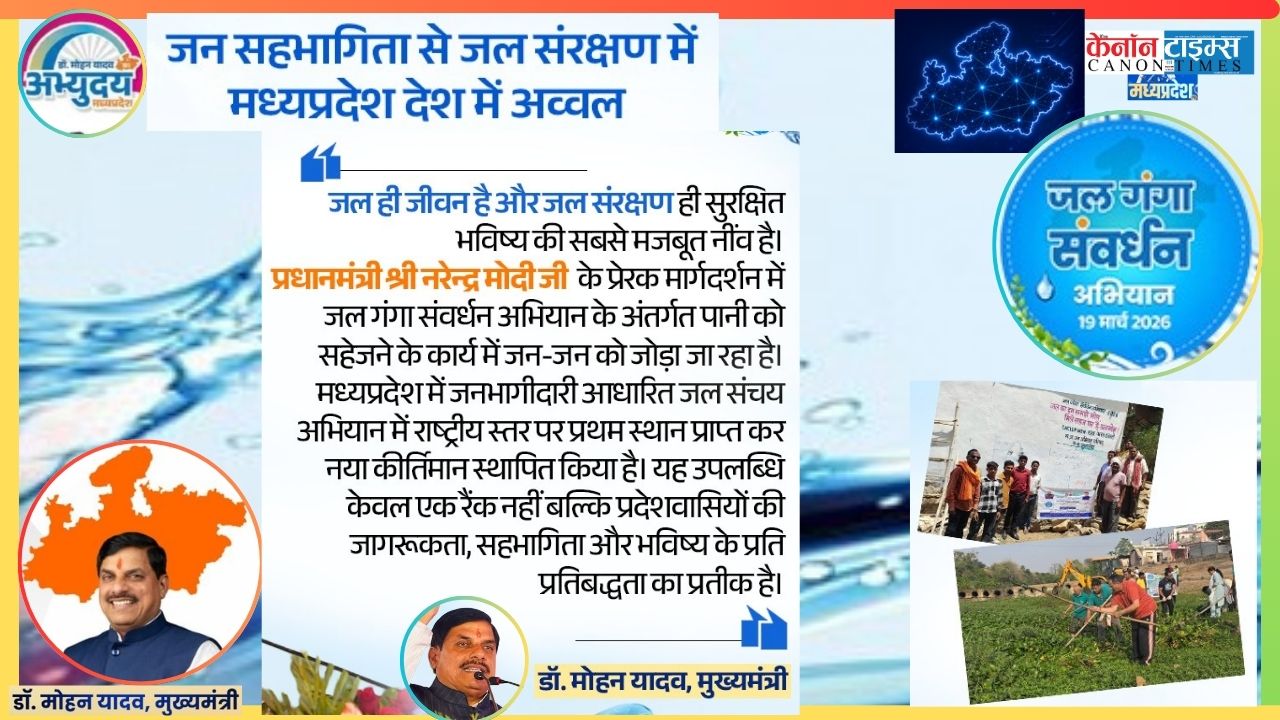
The scale of the campaign, which claims to have completed more than 1.8 lakh water conservation works across the state, reflects an important shift in governance thinking. Water management can no longer depend solely on large dams or centralized infrastructure projects. Reviving rivers, ponds, traditional water bodies, and local conservation systems is equally essential for long term sustainability.

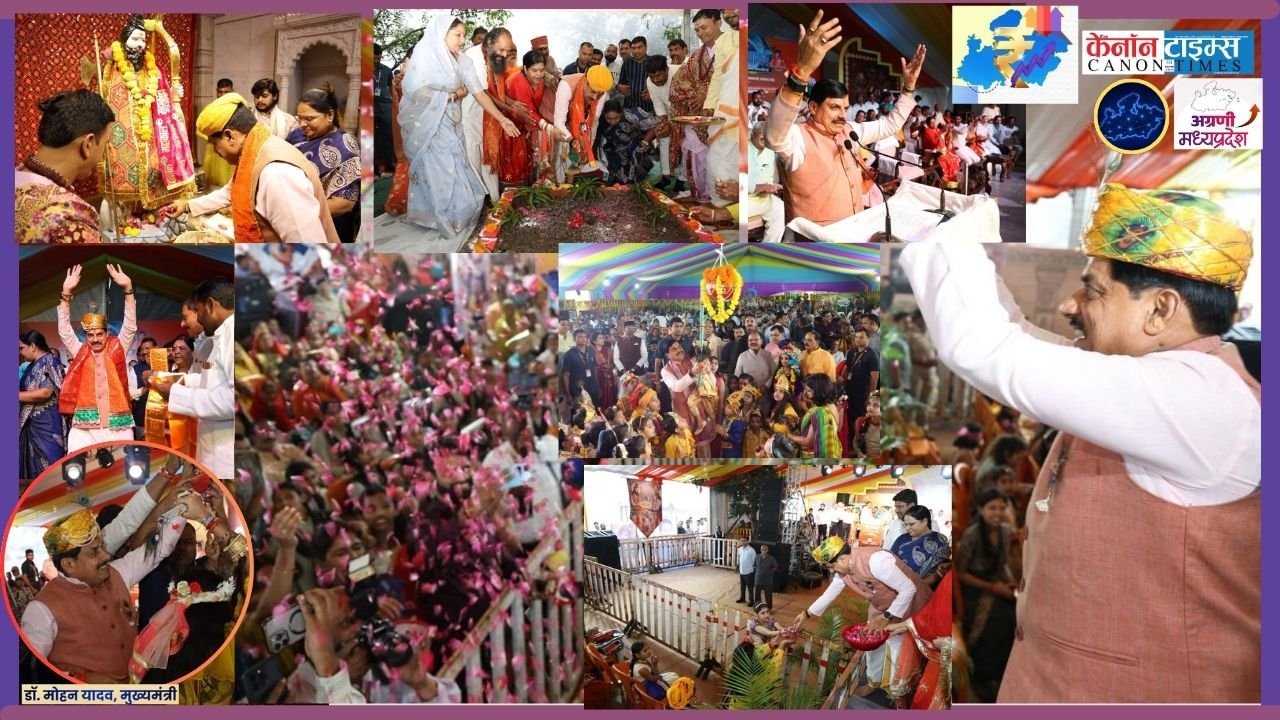
What makes the campaign particularly significant is its effort to connect environmental awareness with cultural identity. Events such as the Shipra Tirth Parikrama in Ujjain and the Sadaneera Samagam in Bhopal seek to bring together spirituality, public participation, scientific discussion, and artistic expression around the shared theme of water conservation. In a country where rivers are deeply embedded in cultural and religious consciousness, linking ecological responsibility with tradition can help create wider public engagement.
The inclusion of scientists, policy experts, corporate representatives, environmentalists, and international delegates at the Sadaneera Samagam indicates recognition that water conservation requires cooperation across sectors. Discussions on groundwater, renewable energy, ecological restoration, and traditional knowledge systems are timely and necessary. India’s water future will depend not only on engineering solutions but also on sustainable planning, responsible consumption, and community participation.
At the same time, such campaigns must move beyond symbolism and event based visibility. Cultural programmes, parikramas, and public gatherings can generate awareness, but long term success will depend on measurable outcomes. River rejuvenation, groundwater recharge, wetland protection, urban water recycling, and scientific watershed management require sustained institutional commitment and strict implementation.
There is also a need to ensure that conservation efforts remain inclusive and locally relevant. Rural communities, farmers, tribal populations, and urban residents must all become active stakeholders in protecting water resources. Traditional knowledge systems, which have historically guided water management in India, should be integrated with modern scientific approaches rather than treated as separate domains.
Equally important is accountability. Public campaigns must be accompanied by transparent monitoring of water projects, maintenance of restored structures, and careful ecological assessment to prevent short term initiatives from becoming temporary exercises without lasting impact.
India’s civilisation has always flourished around rivers and water systems. Yet modern development patterns have often ignored ecological balance, resulting in polluted rivers, disappearing lakes, and severe water stress in many regions. The larger message of campaigns like Jal Ganga Sanvardhan Abhiyan is therefore both environmental and civilisational: protecting water is not only about conserving a resource, but about safeguarding the foundation of human life, agriculture, culture, and future development.
If sustained with seriousness and public participation, such initiatives can help create a new culture of water responsibility in India, where conservation is not treated as an emergency response, but as a permanent way of life.

Author: This news is edited by: Abhishek Verma, (Editor, CANON TIMES)
Authentic news.