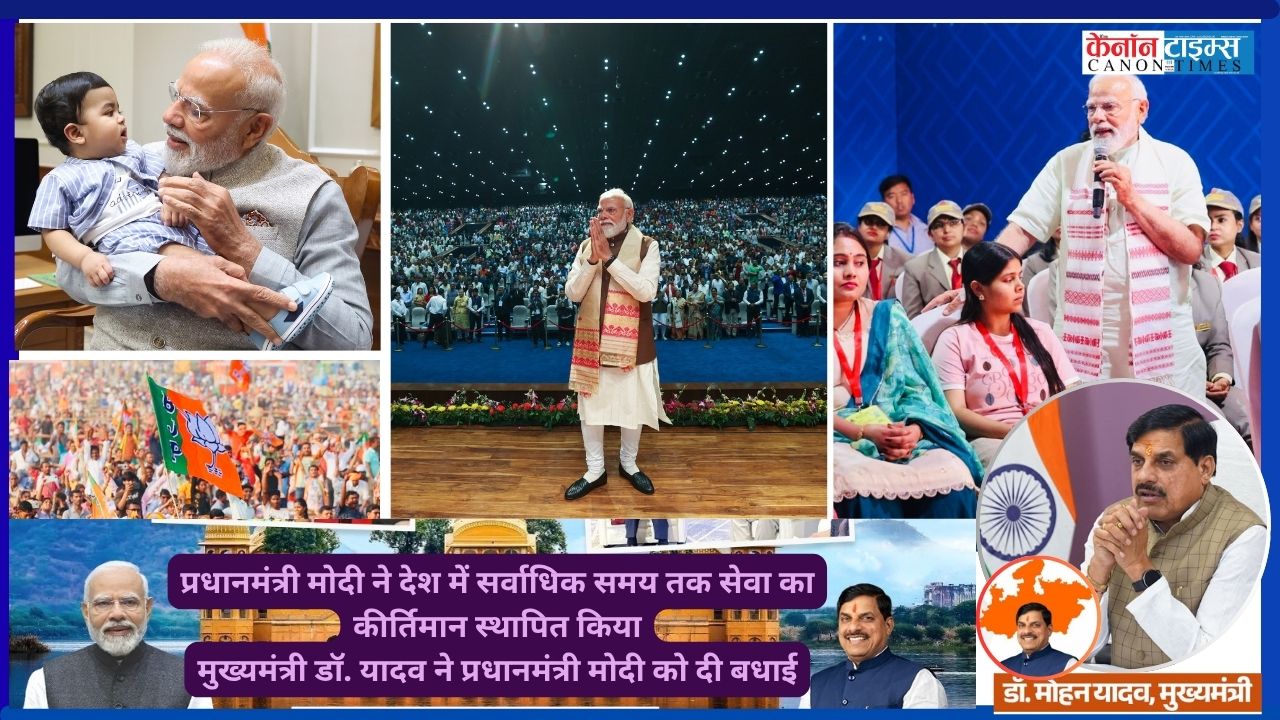
Prime Minister Narendra Modi has now recorded the longest continuous tenure as head of an elected government in India’s history, surpassing the earlier record held by former Sikkim Chief Minister Pawan Kumar Chamling. With 8,931 days in public office as Chief Minister of Gujarat and as Prime Minister of India, Modi’s achievement marks a rare political milestone. The recognition of this record has drawn congratulatory messages from across the political spectrum, including from Madhya Pradesh Chief Minister Dr Mohan Yadav, who described it as a historic achievement and a testament to the people’s trust and affection for the Prime Minister.
A record rooted in continuity
Modi first took charge as Gujarat’s Chief Minister on October 7, 2001, and went on to win re-election to that post in 2002, 2007 and 2012, creating a stable, long running regional administration. In 2014 he led the BJP led alliance to a decisive Lok Sabha victory and became Prime Minister, marking the start of an uninterrupted central government leadership that has now extended through 2019 and 2024 general elections. This continuity is unusual in India’s multi party system, where frequent changes of government are common. The combination of state level and national level service ultimately brought his tally to 8,931 days, nudging past Chamling’s 8,930 day stint as Sikkim CM.
Leadership stability and national image
Chief Minister Dr. Yadav’s remarks underline how Modi’s tenure is now seen by his supporters as synonymous with stability and strong central leadership. They highlight milestones such as reduced poverty, infrastructure expansion, digital governance initiatives, and a more assertive foreign policy profile. The narrative that links Modi’s uninterrupted service with developed India and improved global standing reflects a deliberate effort to frame the record not merely as an individual achievement but as a sign of policy continuity and public confidence. For the ruling establishment, the record becomes a symbolic marker of what they describe as a new era of governance in India.
A record to be watched, not just celebrated
While the record rightly draws attention, it also invites reflection on the trade off’s of prolonged leadership. In a democracy, long tenure demands constant scrutiny, whether institutions remain independent, dissent is tolerated and policy is driven by public consultation rather than personality cult. For Modi’s critics, the same days symbolise deepening polarisation, centralisation of power and challenges to federal balance. For his supporters, they are proof of mandate and performance. As Modi’s government marches on, the real test will be whether this extended period in office translates into broadly inclusive, sustainable development and resilient democratic institutions.

Author: This news is edited by: Abhishek Verma, (Editor, CANON TIMES)
Authentic news.