Madhya Pradesh’s health landscape is transforming at breakneck speed, propelled by visionary infrastructure expansion and targeted welfare initiatives. Chief Minister Dr. Mohan Yadav’s recent pronouncements underscore a state marching resolutely toward superior health indicators, fortifying medical services for every citizen. From plummeting maternal and infant mortality rates to pioneering super specialty care, Madhya Pradesh exemplifies how integrated governance can deliver accessible, high quality healthcare.
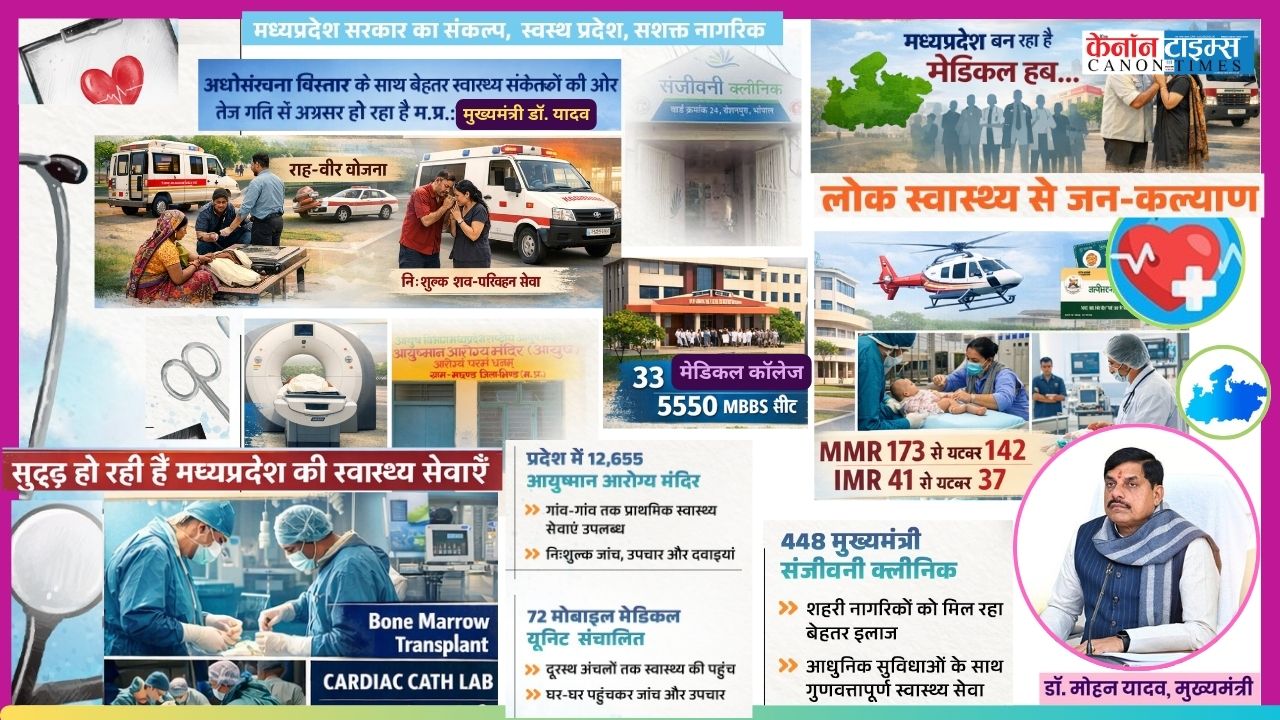
Central to this ascent are remarkable strides in maternal and child health. The Maternal Mortality Ratio (MMR) has dipped from 173 to 142, while the Infant Mortality Rate (IMR) improved from 41 to 37. These are testaments to schemes like Janani Suraksha Yojana and Mukhya Mantri Prasuti Sahayta Yojana, which have disbursed thousands of crores to millions of beneficiaries. Special Newborn Care Units (SNCUs) and Nutrition Rehabilitation Centers (NRCs) now boast higher discharge rates, curbing neonatal issues and malnutrition effectively.
Public health campaigns shine equally bright. Madhya Pradesh ranks among India’s top five states in TB elimination, bolstered by the Sickle Cell Mission’s expansive screening and treatment networks. Ayushman Bharat has issued 4.43 crore cards, offering up to 5 lakh Rupees in free treatment per eligible family. Innovations like PM Shri Air Ambulance have airlifted over 120 critical patients, while free dignified corpse transport and Rah Veer Yojana reward golden hour rescuers with 25,000 Rupees. These infuse humanity into emergencies. Mobile Medical Units ensure remote tribal areas receive consistent care.
The real game changer? A medical education boom positioning Madhya Pradesh as an emerging hub. Medical colleges have surged from six in 2003 to 33 today, with government seats jumping from 14 to 19 and private from 12 to 14 in just two years. MBBS seats now total 5,550 (government: 2,850), PG seats 2,862 (government: 1,468), plus 93 super specialty slots. PPP mode colleges in Katni, Dhar, Panna, and Betul are underway, alongside massive investments: 773.07 crore Rupees for MGM Medical College, Indore; 321.94 crore Rupees for Shyam Shah, Rewa; and 383.22 crore Rupees for Satna’s new hospital. Thirteen new nursing colleges get 192.40 crore Rupees.
Advanced diagnostics proliferate. Linear accelerators operate in Indore, Jabalpur, Rewa, and Gwalior. CT and MRI machines serve five cities. Cardiac cath labs stand in Bhopal and Rewa. Bone marrow transplants function in Indore and Jabalpur. CAR T cell therapy treats blood cancers. With 354 new senior resident posts and robust recruitment of specialists and paramedics, human resources match the hardware.
This orchestrated push signals Madhya Pradesh’s trajectory as a medical powerhouse, blending equity with excellence. Yet sustainability demands vigilant monitoring. It must ensure rural outreach matches urban glitz and private partnerships uphold public trust. For a billion plus nation grappling with health disparities, Dr. Yadav’s model offers a blueprint worth emulating.

Author: This news is edited by: Abhishek Verma, (Editor, CANON TIMES)
Authentic news.