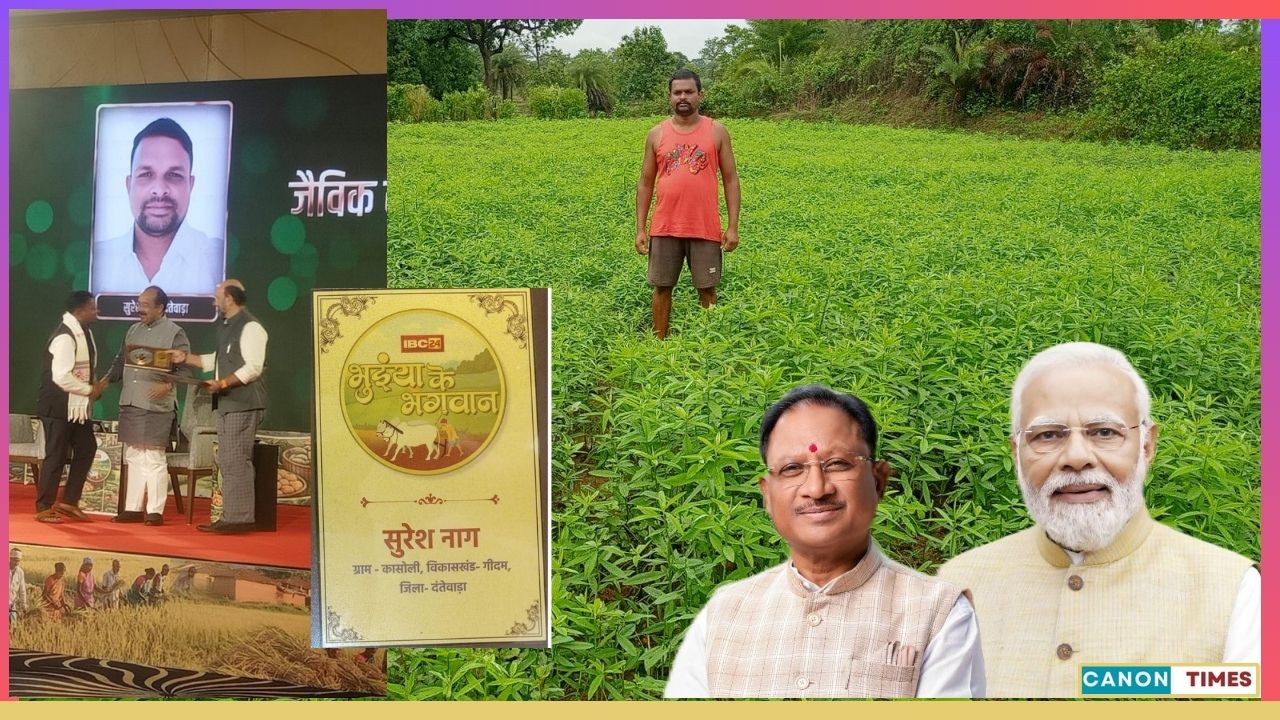
In the heart of Chhattisgarh’s Dantewada district, progressive farmer Suresh Kumar Naag has emerged as a beacon of sustainable agriculture. On February 6, 2026, he received the prestigious “Bhuaiyan ke Bhagwan” (God of the Soil) award from IBC 24, presented by Deputy Chief Minister Arun Sao. This honor, marked by a citation and cash prize, celebrates not just one man’s efforts but a quiet revolution in natural farming that could reshape India’s rural landscape.
Naag’s journey stands out for his bold rejection of chemical fertilizers and pesticides. Long aware of their toxic legacy, including degraded soils, polluted water, and health risks, he switched entirely to organic alternatives like Jeevamrut, Ghan Jeevamrut, Neemastr, and Brahmastr. The results speak volumes, with thriving fields that have inspired neighboring farmers to follow suit. Beyond this, Naag preserves more than 100 traditional rice varieties and pioneers crops such as ragi and kosra through innovative methods. His work aligns closely with district administration and agriculture department initiatives, proving that policy gains real strength when grounded in farmer-led innovation.

Deputy Chief Minister Sao aptly called Naag an inspiration, emphasizing his dual role in improving farm productivity while safeguarding the environment. He noted that farmers like him help protect soil fertility for future generations. In response, Naag dedicated the award to all practitioners of natural farming, underscoring a collective commitment to the health of the planet.
This accolade comes at a critical moment. India’s farmlands are grappling with soil exhaustion after decades of chemical intensive monocropping, which has added to climate vulnerability and farmer distress. Naag’s success shows that natural farming is not just a romantic ideal; it is a practical and viable path forward that is resilient, cost effective, and nutrient rich. It promotes biodiversity, reduces input costs, and strengthens market demand for chemical free produce.
However, several challenges still stand in the way, including limited awareness, poor access to indigenous seeds, and weak market linkages. Governments must amplify successes like Naag’s by providing support for bio inputs, investing in training programs, and creating strong systems for organic certification and branding. Well designed educational campaigns can ignite interest among the youth, discourage distress driven migration to cities, and help revive rural economies.
The story of Suresh Kumar Naag reminds us that true progress lies in working in harmony with nature. By recognizing and supporting such farmer leaders, India can nurture a greener and more prosperous future, one organic field at a time.

Author: This news is edited by: Abhishek Verma, (Editor, CANON TIMES)
Authentic news.