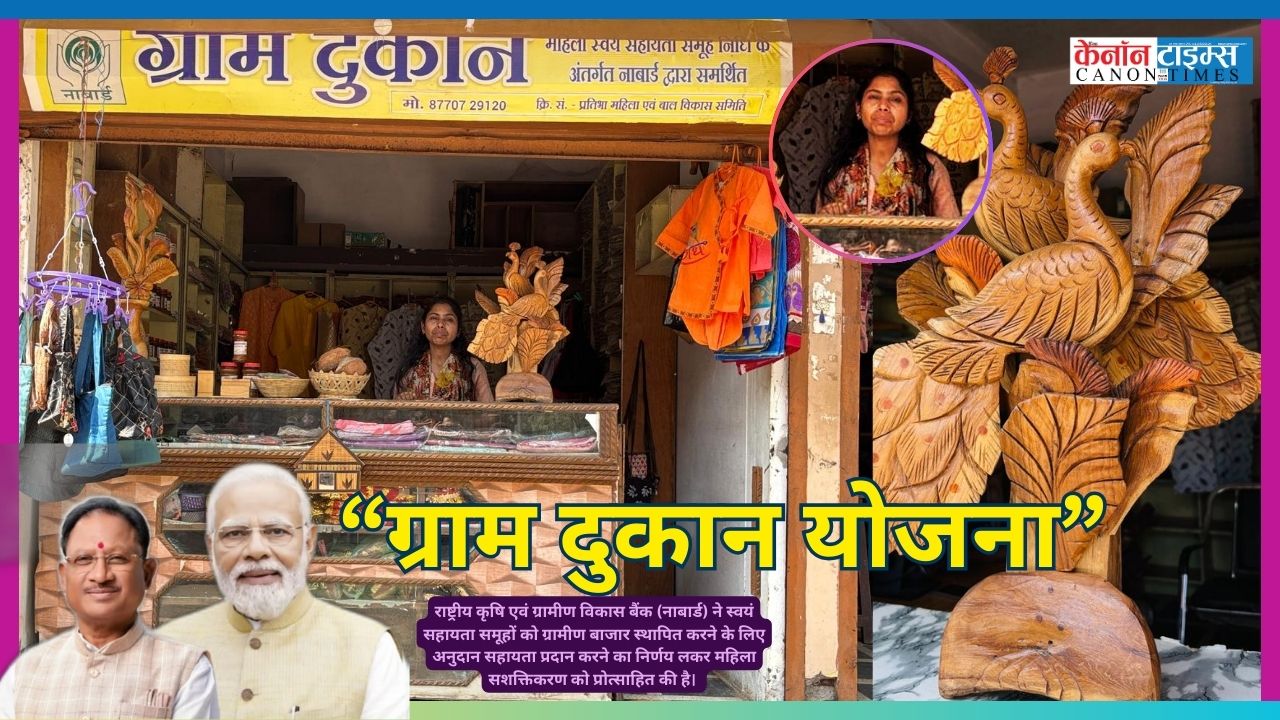
In a powerful boost to rural India, the National Bank for Agriculture and Rural Development (NABARD) is empowering self help group (SHG) women through ‘Gram Dukaan’, grant supported village shops that turn handmade skills into steady income. This initiative provides a vibrant marketplace for local products, elevating living standards and fostering economic independence. Across states, thousands of such outlets are emerging, directly challenging rural poverty by converting traditional crafts into commercial ventures.
A shining example thrives near Patal Bhairavi Temple in Rajnandgaon, Chhattisgarh, where footfall from devotees creates a natural customer base. Here, SHG women showcase an impressive array of homegrown goods: puja items like incense and diyas, pickles and papads with authentic flavors, snacks such as murukku and nadda, forest delicacies including bijori and murabba, everyday essentials like candles, agarbatti, soap, and yam, fresh produce such as flowers and mushrooms, hand stitched clothes, aromatic spices, eco friendly dona pattal plates, decorative items, and various household goods. Attractive, hygienic packaging not only enhances shelf appeal but also builds consumer trust, drawing steady sales from temple pilgrims and locals alike.

Shop operator Nisha Mandavi shares that the prime location yields enthusiastic responses, translating to reliable monthly earnings for over a dozen SHG members. NABARD’s provision of free shop space eliminates startup hurdles, offering a permanent, accessible platform that encourages innovation. What began as sporadic home based crafts now fuels collective prosperity, with women reinvesting profits into education, healthcare, and expanded production.
This model exemplifies grassroots innovation at its best: skill meets market access, women gain financial agency, and local economies gain strength through reduced migration and increased circulation of money. By linking producers directly to buyers, Gram Dukaan slashes middlemen costs, boosts pricing power, enhances confidence via skill validation, and sustains livelihoods year round. Nationally, it aligns with Atmanirbhar Bharat, amplifying voices from villages often overlooked in urban centric growth narratives. Early data shows participating SHGs reporting 30 to 50 percent income rises, proving scalable impact.
Yet challenges persist: seasonal demand fluctuations, competition from mass produced goods, and limited digital reach. Governments and banks must scale such efforts nationwide by integrating digital payments for wider markets, providing branding and certification support, and offering advanced skill training in packaging, accounting, and e commerce. Partnerships with tourism boards could replicate Rajnandgaon’s temple synergy elsewhere.
When rural women thrive as entrepreneurs, entire communities flourish: children attend school longer, family nutrition improves, and villages retain talent. Gram Dukaan proves entrepreneurship knows no urban bounds. Policymakers, take note, invest boldly to unleash this quiet revolution.

Author: This news is edited by: Abhishek Verma, (Editor, CANON TIMES)
Authentic news.