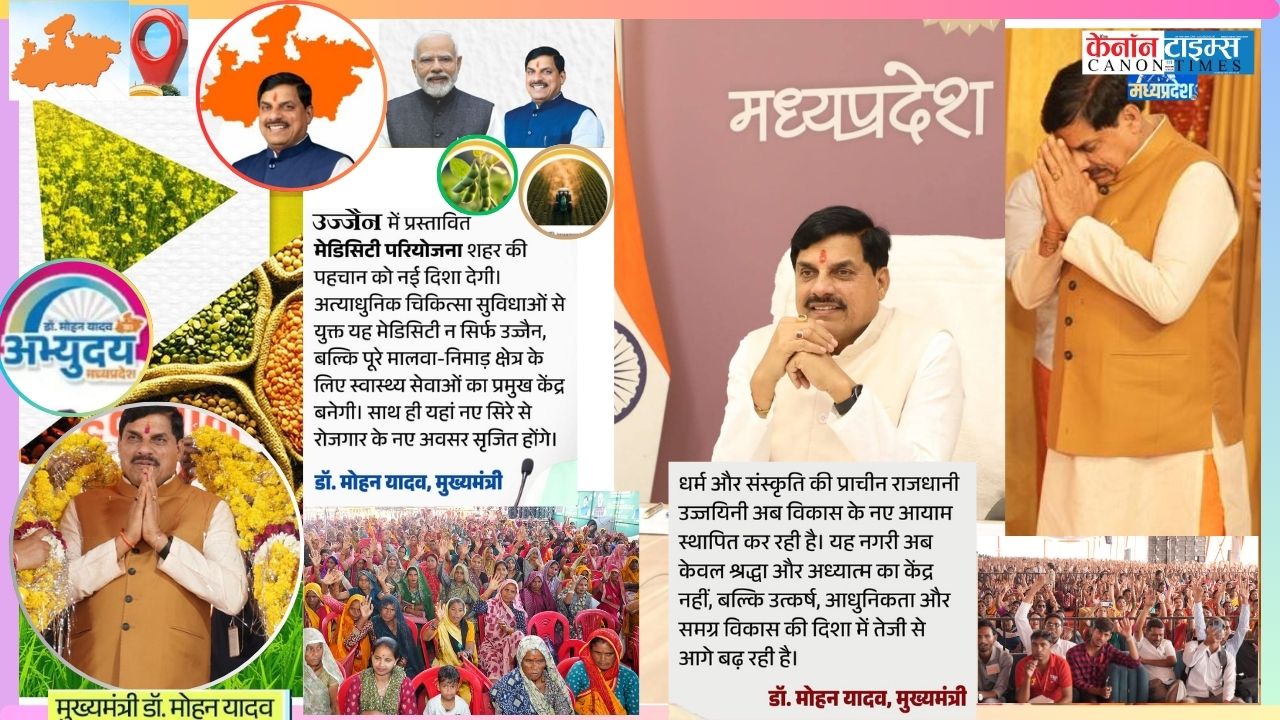
On the birth anniversary of former Prime Minister Atal Bihari Vajpayee, Rewa became the stage for a dual message of moral legacy and agrarian reform. Union Home and Cooperation Minister Amit Shah, speaking alongside Madhya Pradesh Chief Minister Dr. Mohan Yadav, invoked Vajpayee’s politics of integrity and transparency as the moral compass for India’s governance. Yet, even as Shah celebrated that ethos, he drew attention to a more immediate challenge, how to reshape India’s rural economy through cooperative revival, natural farming, and sustainable growth.
The launch of the Basaman Mama Natural Farming Project at the Basaman Mama Cow and Wildlife Sanctuary marks a distinct pivot in India’s agricultural vision. Designed as a model for natural farming in the Vindhya region, the project combines traditional wisdom with scientific validation, offering an eco friendly alternative to chemical intensive agriculture. Shah asserted that natural farming does not diminish productivity; instead, it enhances soil health, lowers input costs, and supports public well being, a claim he endorsed through personal experience on his own farm.

A Blueprint for Cooperative Growth
Under the guidance of the Ministry of Cooperation, India is seeking to institutionalise natural farming as both a sustainable livelihood and an economic opportunity. More than four hundred laboratories, Shah announced, will soon provide certification and testing services for crops grown under natural methods. This initiative will standardise quality, ensure fair pricing, and open export channels for organic produce, potentially raising farmers’ incomes by up to fifty percent.
The cooperative approach, as Dr. Mohan Yadav highlighted, is not merely an administrative model but a social compact. With the Centre and state working in tandem, Madhya Pradesh is focusing on income diversification, ranging from dairy development and breed improvement to organic crop production. Programs like the Dr. B. R. Ambedkar Kamdhenu Yojana and partnerships with the National Dairy Development Board are intended to double the state’s milk output from nine percent to twenty percent in the coming years.
A Moral Economy of Agriculture
The Rewa convention served as both a policy announcement and a philosophical reaffirmation. Shah’s reference to Vajpayee’s clean politics underscored the idea that governance rooted in ethical clarity can fuel transformative development. Natural farming, in that sense, becomes not simply a technical modification but a moral choice, aligning economic growth with environmental balance and social responsibility.
The Basaman Mama model, where a single indigenous cow can sustain natural farming across twenty one acres, is emblematic of a return to self reliant agrarian systems. By leveraging cow based compost and organic residue, the state hopes to curb the damaging overuse of fertilizers and pesticides, the invisible pollutants behind rising health concerns. As Shah observed, when the land and its people are healthy, the nation too becomes resilient.
From Rewa to Rural India
Chief Minister Yadav’s announcement declaring 2026 as the “Year of Agriculture” positions Madhya Pradesh at the forefront of India’s rural renaissance. His government’s decision to increase the feed subsidy per cow, facilitate milk procurement, and strengthen dairy cooperatives signals a pragmatic blend of welfare and productivity.
At the same time, the presence of Deputy Chief Minister Rajendra Shukla and senior legislators underlined that the event was not merely ceremonial but programmatic, an effort to transform natural farming into a grassroots movement. As Shukla noted, the state’s commitment to cow conservation and organic fertilizer use translates faith into functional policy.
Carrying Vajpayee’s Legacy Forward
The symbolism of launching this initiative in Rewa, a region with deep emotional ties to Vajpayee, was not lost on the gathering. For Amit Shah, invoking Vajpayee’s name at an agricultural convention fused two enduring ideals, clean politics and clean farming. Both, he argued, are about trust, trust in governance, in the soil, and in the people who nurture it.
In its essence, the Rewa conference presented a vision of economic nationalism with ecological conscience. By aligning cooperative structures with natural farming and technology backed certification, the government is attempting to create a model of agrarian self sufficiency that is ethical, profitable, and sustainable.
If Vajpayee represented moral clarity in public life, Shah’s invocation of his legacy through agricultural reform seeks to extend that clarity to the field itself, where transparency, purity, and productivity coexist as the true measure of national progress.

Author: This news is edited by: Abhishek Verma, (Editor, CANON TIMES)
Authentic news.