The Seep-Amber micro-irrigation project in Sehore marks a major expansion of agricultural infrastructure, but its success will depend on reliable water supply, efficient use and benefits reaching every intended farmer.
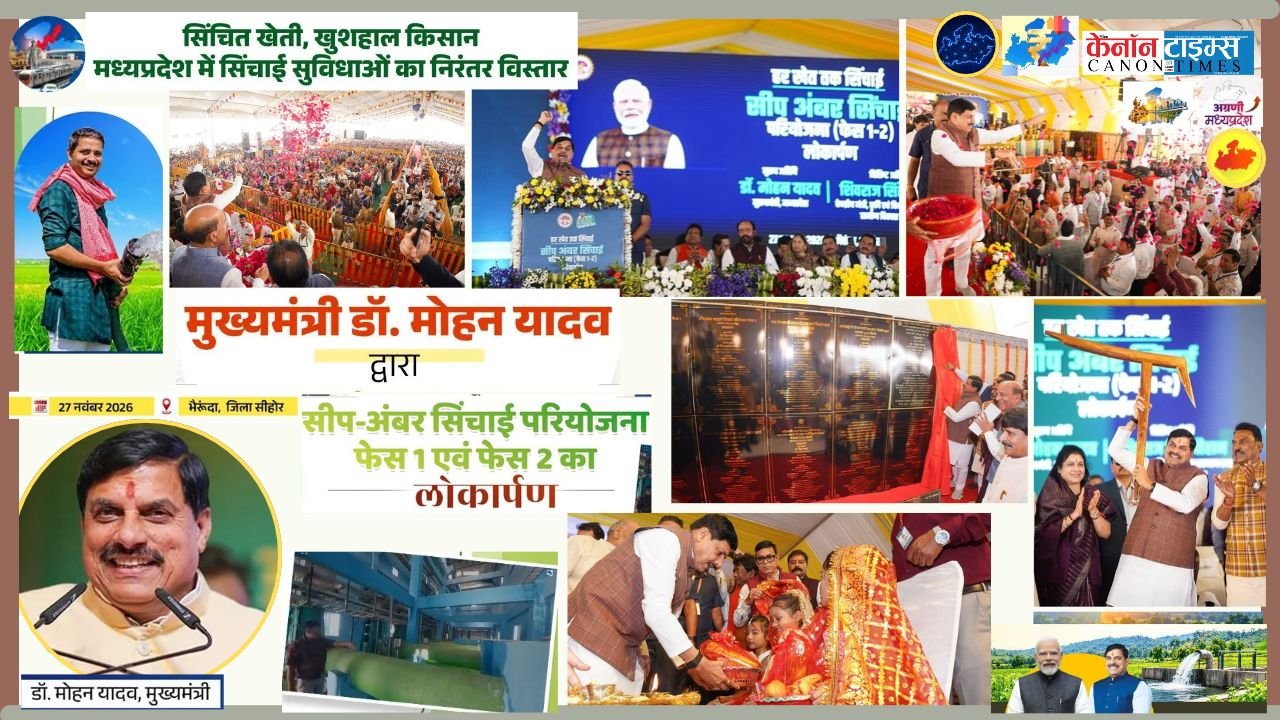
Access to irrigation can transform the economic prospects of farming communities. In rain-dependent regions, uncertainty over rainfall often determines not only crop yields but also household income, debt and the ability to invest in the next season. The inauguration of both phases of the Seep-Amber micro-irrigation project in Bhairunda, Sehore district, is therefore an important development for Madhya Pradesh’s agricultural economy.

Built at a cost of Rs 536.23 crore, the project is expected to provide irrigation to 30,091 hectares across 76 villages and benefit more than 8,000 farmers. Water from the Narmada will be carried through underground pipelines, enabling farmers to use modern methods such as drip and sprinkler irrigation. The project is part of a broader development package of 19 works worth Rs 577.67 crore announced for Sehore district.
The significance of this investment lies in its potential to reduce dependence on uncertain rainfall and improve the productivity of agricultural land. Reliable irrigation can encourage farmers to diversify crops, increase cropping intensity and make better use of inputs. Micro-irrigation, when properly maintained and adopted, can also help improve water-use efficiency.
But infrastructure alone cannot guarantee prosperity. Farmers must receive water according to a transparent and dependable schedule. The distribution network needs regular maintenance, adequate electricity and effective monitoring to prevent leakages or unequal access. Small and marginal farmers should not find themselves disadvantaged in the operation of the system or in the cost of adopting modern irrigation equipment.
The project also raises an important question about water sustainability. Expanding irrigation across Madhya Pradesh must be accompanied by careful planning of river resources, groundwater recharge and local water demand. Efficient irrigation is not simply a technical achievement; it is essential to protect agricultural production from future water stress.
The government’s wider commitment to improving irrigation coverage is encouraging. Yet progress should be assessed through measurable outcomes: how much land is actually irrigated, how many farmers receive regular water, whether crop yields and net incomes improve, and whether the system remains functional beyond its inauguration.
The Seep-Amber project has the potential to bring meaningful change to 76 villages. Its true achievement will be seen when water reaches the fields season after season, farming becomes more resilient and the benefits are shared fairly across the farming community. That is when irrigation investment will translate into lasting rural prosperity.

Author: This news is edited by: Abhishek Verma, (Editor, CANON TIMES)
Authentic news.