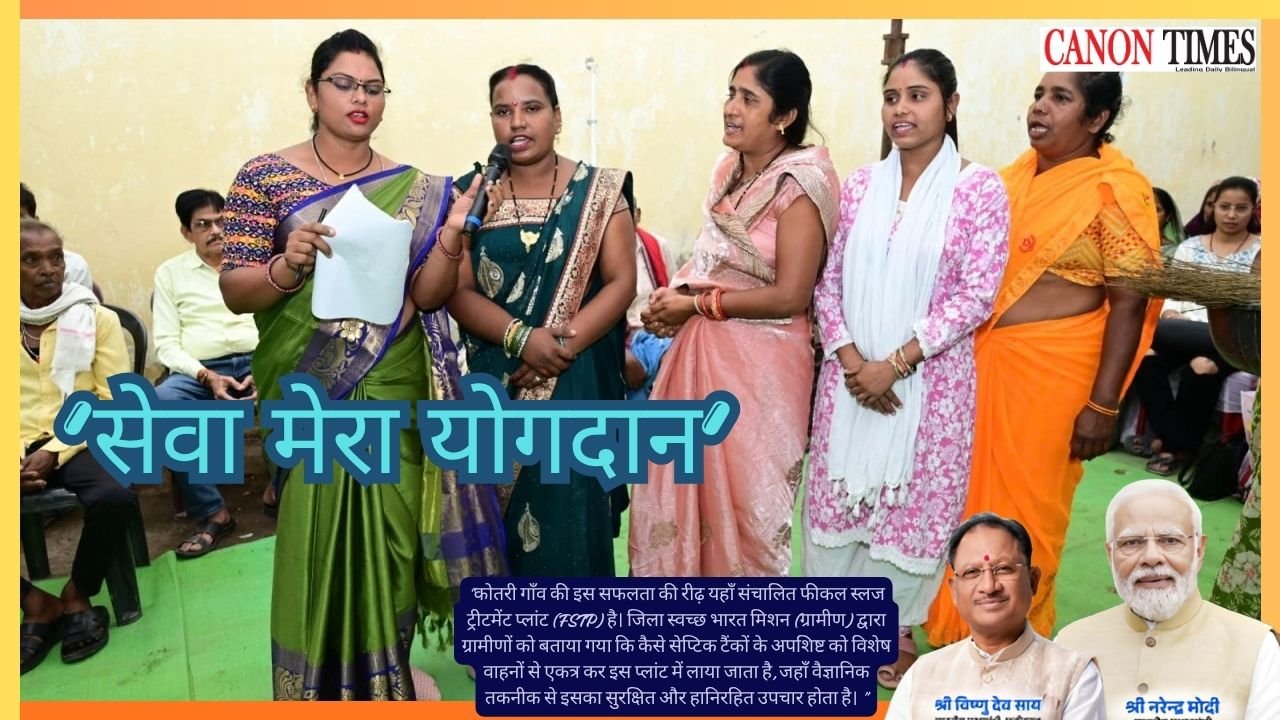
In Kotri village of Sarangarh block, waste is no longer a problem. It is a resource. Under the Seva Sankalp Abhiyan and Swachhata Hi Seva, the gram panchayat has turned rural sanitation into a people’s movement. Wet and dry waste are segregated at source. Recycling is routine. Composting turns kitchen scraps into manure. At a recent Seva Mera Yogdan event, women from the Bihan self help group staged a street play that taught households how to separate waste, recycle and make compost. Their message was simple. Cleanliness is not a government campaign. It is a daily habit.
The backbone of this success is the Faecal Sludge Treatment Plant. Under the Swachh Bharat Mission Rural, septage from household tanks is collected by dedicated vehicles and treated at the FSTP using scientific methods. The output is safe and the process protects local water and soil. Recycling of by products reduces environmental load. During the event, sanitation volunteer Basant Bharati was honoured with a cleanliness kit for outstanding work. Elected representatives, officials and residents took a collective pledge to keep Kotri clean. The village now combines segregation, scientific treatment and community mobilisation into a single system.

Why does this matter. Rural sanitation often fails at the last step. Toilets are built, but waste is not managed. Drains carry untreated effluent. Open dumping spreads disease. Kotri shows a different path. When waste is sorted, the volume that needs collection drops. When compost is made locally, farms gain organic matter and households save on fertiliser. When septage is treated, groundwater stays safer. When women lead awareness, behaviour change sticks. The Bihan model turns neighbours into teachers. A street play reaches people who may never attend a formal meeting. The lesson spreads through song, humour and peer pressure.
The real test will be scale and sustainability. Will every household keep segregating without lapses. Will compost quality be monitored so that farmers trust and use it. Will the FSTP run with regular desludging, power and maintenance so that it does not become a white elephant. Will budgets cover collection vehicles, worker wages and repair costs year after year. And will recognition, like the kit given to Basant Bharati, be used to motivate more volunteers, not just honour a few. If these pieces fall into place, Kotri can become a template for other villages in Chhattisgarh and beyond.
For residents, the gain is direct. Cleaner lanes. Less smell. Fewer diseases. More pride. That is the true measure of this push: not just the plants built, but the habits formed and the health protected.

Author: This news is edited by: Abhishek Verma, (Editor, CANON TIMES)
Authentic news.