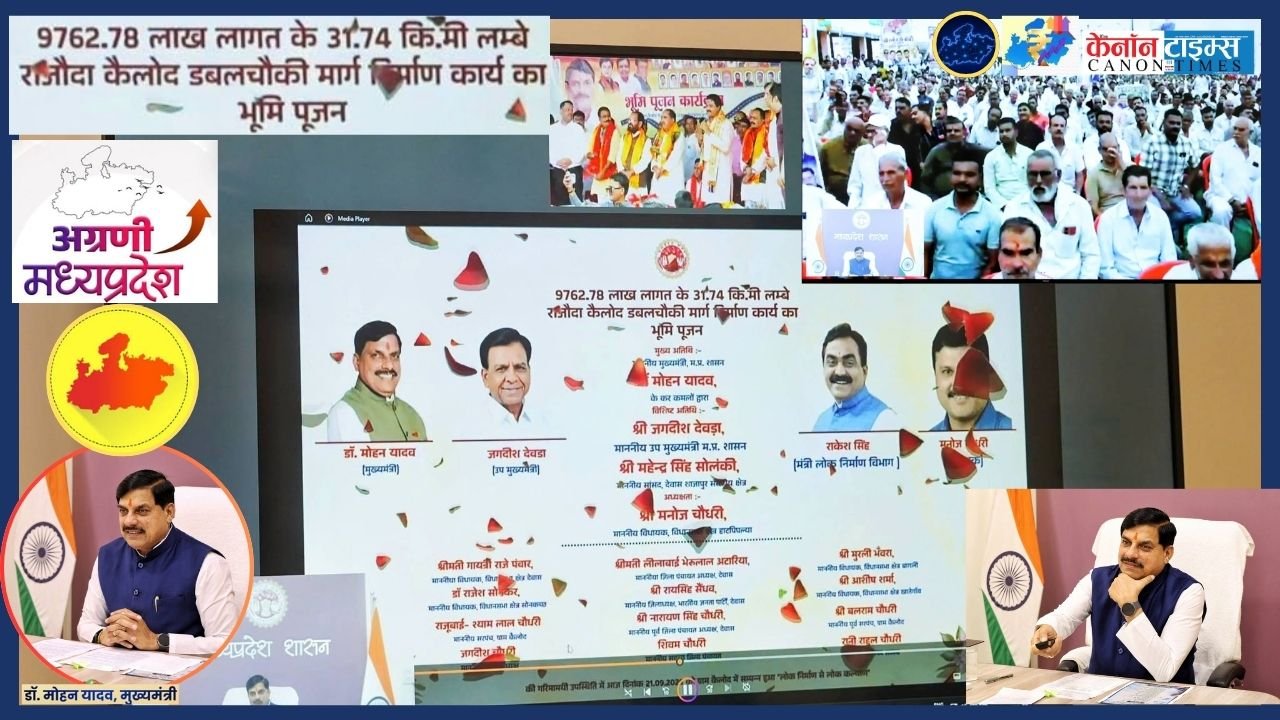
Chief Minister Dr Mohan Yadav said roads are the foundation of development and prosperity. At a virtual event from Bhopal, he laid the foundation stone for the 32 km Rajoda Kelod Double Chauki road in Hatpiplya. The project, costing about 98 crore rupees, will link Rajoda through Kelod to the Indore Betul national highway at Double Chauki. It will connect Hatpiplya to Devas, Indore and Betul. Travel to the district headquarters will shorten by about 40 to 45 km. Around 25 villages and 70,000 residents will gain easier access to markets, schools and hospitals. In the same event, the Chief Minister announced the 12 km Sukhaliya to Tigaria road at an estimated cost of 11.40 crore rupees. This will benefit over 20 villages and 20,000 people. He also recalled the July gift of a new Sandipani school building for students in Sanod and urged citizens to join the Seva Sankalp Abhiyan.
This is more than a ribbon cutting. It is a bet on connectivity as a multiplier. A good road lowers transport cost and time. It raises farm gate prices by reducing spoilage. It makes commutes to work and college feasible. It brings ambulances and fire services closer. For a block like Hatpiplya, which sits between Indore and Betul, the new link can shift the economic gravity. Farmers can reach mandis faster. Small businesses can source and sell with less friction. Young people can access jobs without migrating. The Sukhaliya to Tigaria stretch adds a second layer of access for villages that once depended on longer detours.

Why does this matter at scale. Rural roads are the first rung of the infrastructure ladder. When they are built well and maintained, they unlock value across sectors. Agriculture gains from timely input delivery and output movement. Education gains from safer and shorter travel. Health gains from emergency access. Women gain when daily chores no longer require long walks on poor tracks. The state’s push on Swamitva records, with free registration of 50 lakh rural leases, complements this by clarifying land titles and reducing disputes that often delay projects. Together, these moves aim to make the last mile of governance more tangible.
The real test will be execution and upkeep. Will alignments avoid unnecessary land loss and environmental damage. Will drainage and culverts be designed for local rainfall so that roads do not wash out in the first monsoon. Will quality checks be strict so that layers and materials meet specifications. Will maintenance budgets be set aside so that potholes are fixed before they become craters. And will bus services and last mile transport be planned so that the road’s capacity translates into actual mobility for those without private vehicles. If these pieces fall into place, the Rajoda Kelod Double Chauki corridor can become a template for other blocks.
For residents, the promise is simple. Less time on the road. More time for life. That is the true measure of this push: not just the kilometres laid, but the opportunities opened and the risks reduced.

Author: This news is edited by: Abhishek Verma, (Editor, CANON TIMES)
Authentic news.