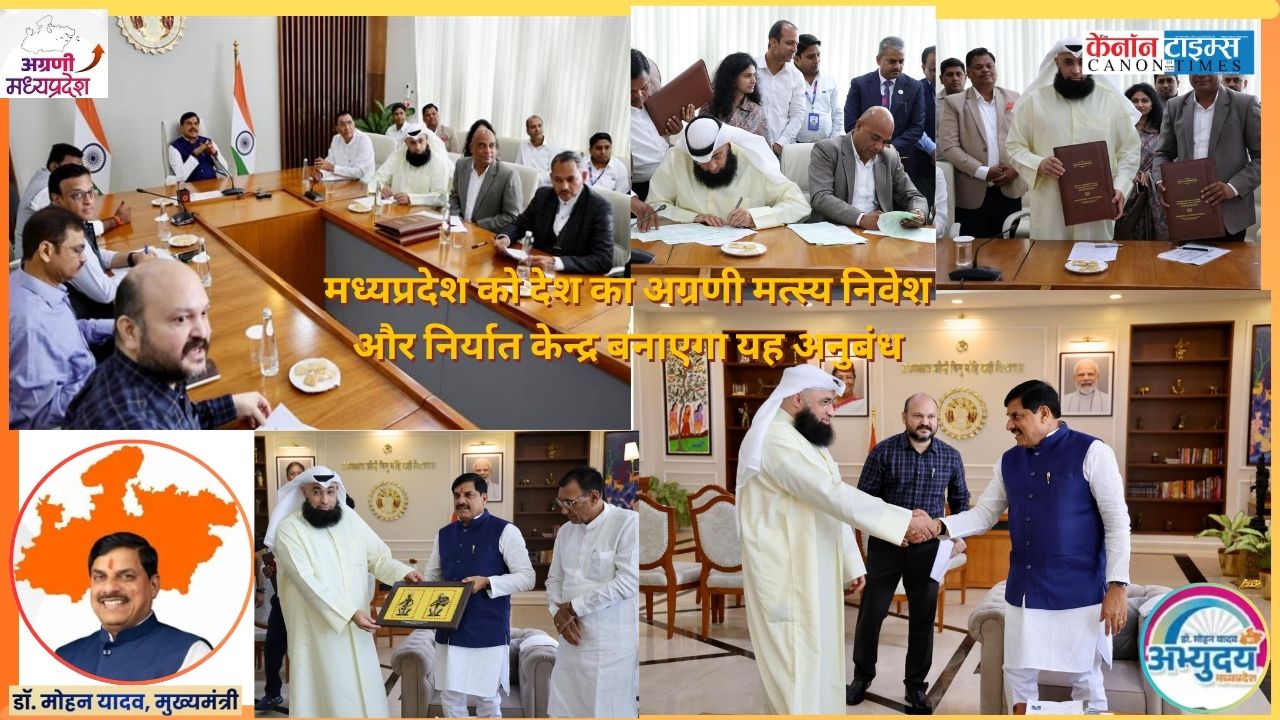
The agreement signed with a Kuwaiti fisheries company is an important signal that Madhya Pradesh is beginning to treat fisheries not as a side activity, but as a major economic sector. A proposed investment of Rs 7,430 crore, along with an export target of around Rs 6,000 crore, suggests that the state wants to move from local fish production to a globally connected value chain. If implemented well, this could reshape the livelihoods of fish farmers, fishing communities and rural youth across the state.
What makes this development notable is the scale of ambition. The plan is not limited to fish cultivation alone. It includes cage culture in major reservoirs, supporting infrastructure, aquaponics, hydroponics, greenhouses and backward and forward linkages. That means the state is thinking in terms of an ecosystem, not just a commodity. Such an approach is essential if fisheries are to generate durable income rather than remain vulnerable to seasonal and market fluctuations.

The employment potential is also significant. The promise of 15,000 direct and 20,000 indirect jobs reflects the broader impact that allied industries can create when production, processing, storage and transport are linked properly. For rural communities, this can mean more than wages. It can create stable local opportunities that reduce migration and keep economic activity closer to home. That is especially important in a state where agriculture and water based livelihoods are deeply interwoven.
The proposed expansion in reservoirs like Indira Sagar, Bargi, Bansagar and Barna could also become a major asset if managed responsibly. Madhya Pradesh has a strong natural base for fisheries, but infrastructure alone is not enough. The real challenge will be balancing production with sustainability, ecology and fair access for local communities. Fisherfolk must not be left out of decision making as larger investment flows into the sector. Their participation will determine whether this becomes inclusive growth or just an industrial announcement.
There is also a welcome diversification angle here. The integration of fish production with vegetables through aquaponics and greenhouse systems shows a modern agricultural mindset. In a changing climate, such integrated systems can use water more efficiently and create multiple sources of income from the same space. That is exactly the kind of innovation rural economies need if they are to remain resilient in the future.
The partnership with a foreign company is politically and economically useful only if it results in real capacity building inside the state. Export plans, processing networks and international market access should not stay at the level of aspiration. They must translate into technology transfer, improved quality standards, better prices for producers and stronger local institutions. Otherwise, the benefits will remain concentrated in a few hands.
Madhya Pradesh now has a chance to become a serious hub for fisheries investment and export. The state’s advantage lies in its reservoirs, its geography and its willingness to think beyond traditional farming. If this policy is executed with discipline and ecological caution, it could create a new rural growth story — one where fish, vegetables, jobs and exports together support a more prosperous countryside.

Author: This news is edited by: Abhishek Verma, (Editor, CANON TIMES)
Authentic news.