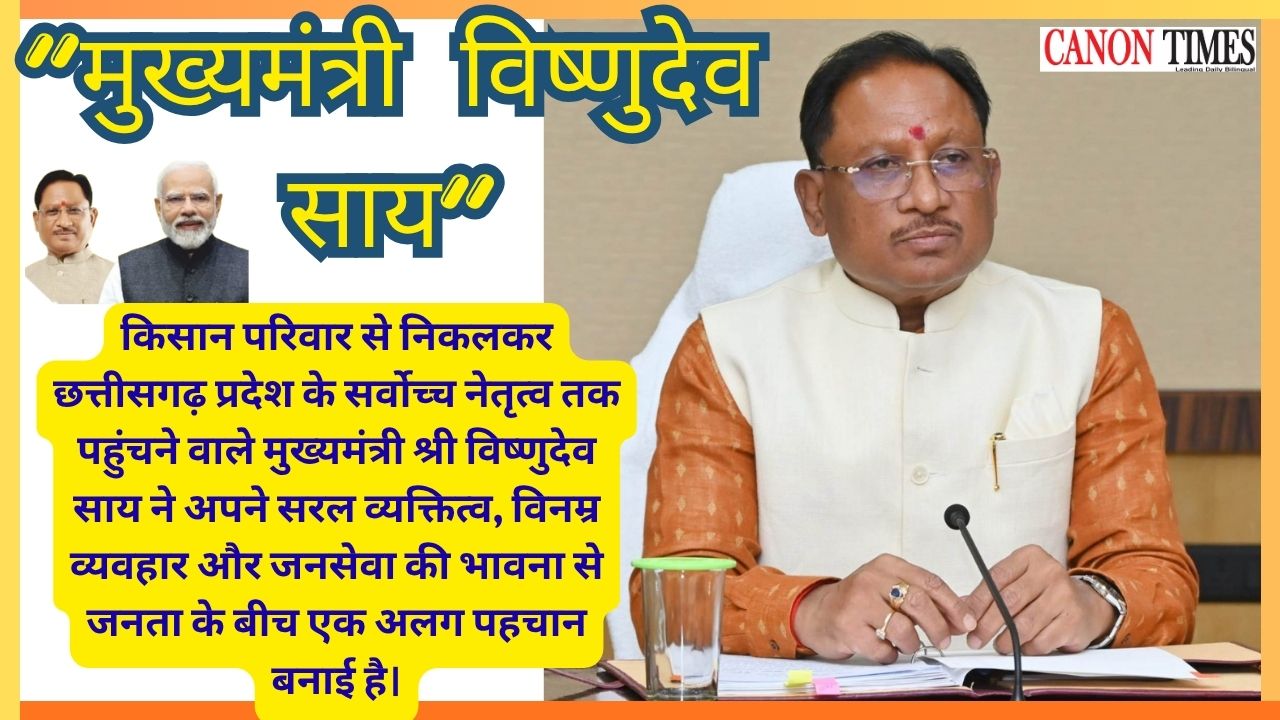
Chief Minister Vishnu Deo Sai has built a political identity that rests not on spectacle but on simplicity, sensitivity and direct connection with people. Coming from a farmer family and rising to the highest office in Chhattisgarh, he represents a leadership style that is rooted in lived experience rather than distance from ordinary citizens. That matters in public life, because people do not only want announcements; they want a government that listens, responds and delivers with empathy.
What stands out in his leadership is the emphasis on access. Public interaction through Jan Darshan, Su-Gaashan Tihar and field visits reflects an understanding that governance becomes credible only when citizens can speak directly to those in power. For rural communities, tribal families, women, youth and the poor, that kind of contact is not symbolic. It can mean faster resolution of problems, greater trust in institutions and a sense that the state is visible in everyday life.
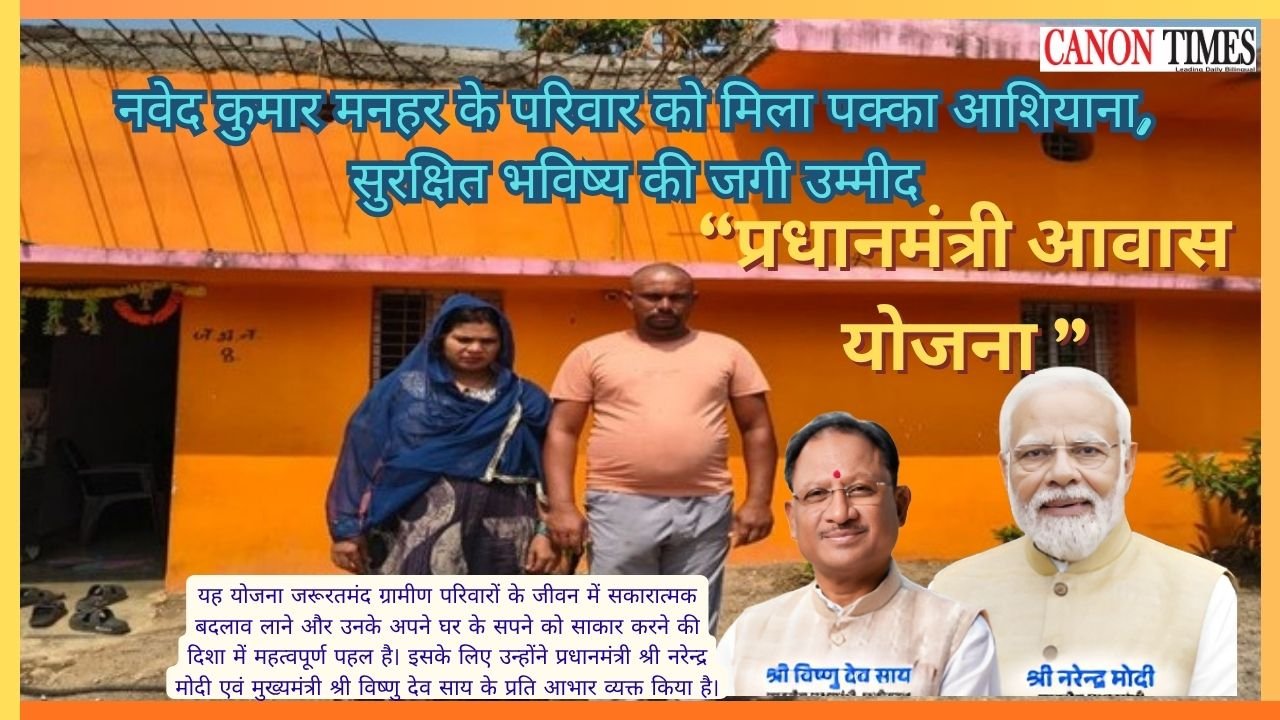
The government’s welfare focus has also been wide reaching. The Mahtari Vandan scheme has provided monthly support to women, strengthening household security and recognizing women as central participants in economic life. Higher support for tendu leaf collectors has offered relief to forest dependent families whose income often fluctuates with seasonal conditions. The commitment to housing, including the expansion of pucca homes for poor families, addresses one of the most basic markers of dignity and stability. These are not isolated benefits. Together they show a pattern of governance that tries to touch the most vulnerable first.
Chhattisgarh’s farmers have also remained at the centre of the state’s policy approach. Procurement at Rs 3,100 per quintal for paddy has delivered direct economic support to lakhs of cultivators and reinforced the idea that agriculture remains the backbone of the state’s economy. In a state where agriculture, forest produce and rural livelihoods are deeply intertwined, this kind of support can have a wider multiplier effect on local demand and rural confidence.
At the same time, the state’s industrial and infrastructure push is equally important. A new industrial policy, a single window system, road and rail expansion, and improved air connectivity all suggest an effort to make Chhattisgarh more attractive to investment while also reducing the distance between remote areas and opportunity. If these initiatives continue to improve logistics, lower costs and speed approvals, they could help the state move from potential to productivity.
The government’s zero tolerance approach to corruption is another significant element. Public confidence grows when accountability is not just promised but enforced. Technology based governance, e office systems, helplines and surprise inspections can help reduce delay and leakage, but only if they are followed by real consequences for misconduct. In that sense, administrative reform is as important as welfare spending.
Perhaps the most notable aspect of Vishnu Deo Sai’s leadership is the combination of compassion and discipline. He is being described as a leader who is simple in manner but firm in direction, sensitive to people’s struggles yet determined to raise standards in administration. That combination is not easy to maintain, but it is exactly what a developing state needs. If Chhattisgarh can sustain this balance between welfare, infrastructure, accountability and inclusion, it may well build a model of development that is both humane and durable.

Author: This news is edited by: Abhishek Verma, (Editor, CANON TIMES)
Authentic news.