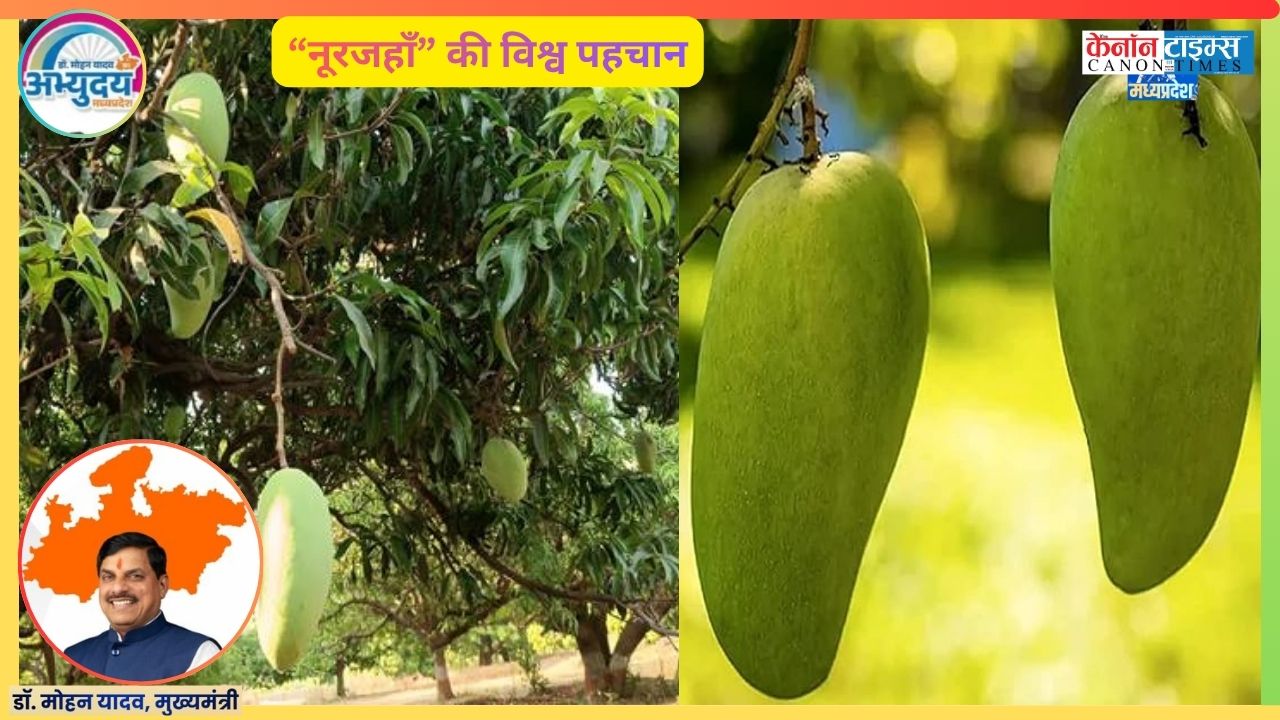
India’s identity as the “land of mangoes” is deeply woven into its culture, agriculture, and economy. From Alphonso to Dasheri, every region has its signature variety. Yet among the countless mangoes produced across the country, Madhya Pradesh’s Noorjahan mango stands apart not only for its extraordinary size but also for the story of heritage, agricultural innovation, and rural prosperity that it represents.
Grown primarily in the tribal belt of Alirajpur district’s Katthiwada region, the Noorjahan mango has earned recognition as one of the world’s largest mango varieties. Weighing between two and five kilograms, the fruit has become a symbol of exclusivity and premium quality. Its distinct sweetness, aroma, and appearance have created growing demand not just in India’s metropolitan markets but also in international destinations such as the Gulf countries, the United States, Canada, and the United Kingdom.

However, the importance of Noorjahan mango extends far beyond its market price or novelty value. Its success highlights the untapped potential of India’s horticulture sector, especially in tribal and rural regions often overlooked in mainstream agricultural discussions. In areas where farming communities frequently struggle with limited resources and market access, a high value crop like Noorjahan offers an opportunity for income diversification and economic empowerment.
The history of this rare mango variety also reflects the role of traditional farming knowledge and generational conservation. Farmers in the Katthiwada region preserved and nurtured this variety for decades through grafting techniques and local expertise long before it gained commercial recognition. Such examples remind us that agricultural innovation in India is not limited to laboratories and research centres; it also exists in the experience and dedication of rural cultivators.
At the same time, the growing international demand for premium Indian mangoes presents a larger opportunity for agricultural exports. Global consumers are increasingly drawn towards unique, natural, and region specific products. Noorjahan mango, with its rarity and luxury appeal, can become an important brand ambassador for Madhya Pradesh’s horticulture sector if supported through proper marketing, export infrastructure, and geographical indication protection.
Yet there are challenges that cannot be ignored. Since production remains limited and climate conditions play a major role in fruit quality, sustainable cultivation practices are essential. Farmers require scientific guidance, irrigation support, cold storage facilities, and better transport networks to reduce losses and maintain export standards. Without proper institutional support, rare varieties often struggle to survive commercial pressures and changing weather patterns.
The larger lesson from Noorjahan mango is that agriculture today must move beyond quantity towards value creation. India’s farmers can benefit significantly when traditional crops are linked with branding, processing, and international markets. Premium horticulture products not only raise incomes but also strengthen regional identity and tourism potential.
The Noorjahan mango is therefore more than a giant fruit or a luxury delicacy. It represents the richness of India’s agricultural diversity, the resilience of tribal farming communities, and the growing possibility of transforming local produce into a global symbol of excellence.

Author: This news is edited by: Abhishek Verma, (Editor, CANON TIMES)
Authentic news.