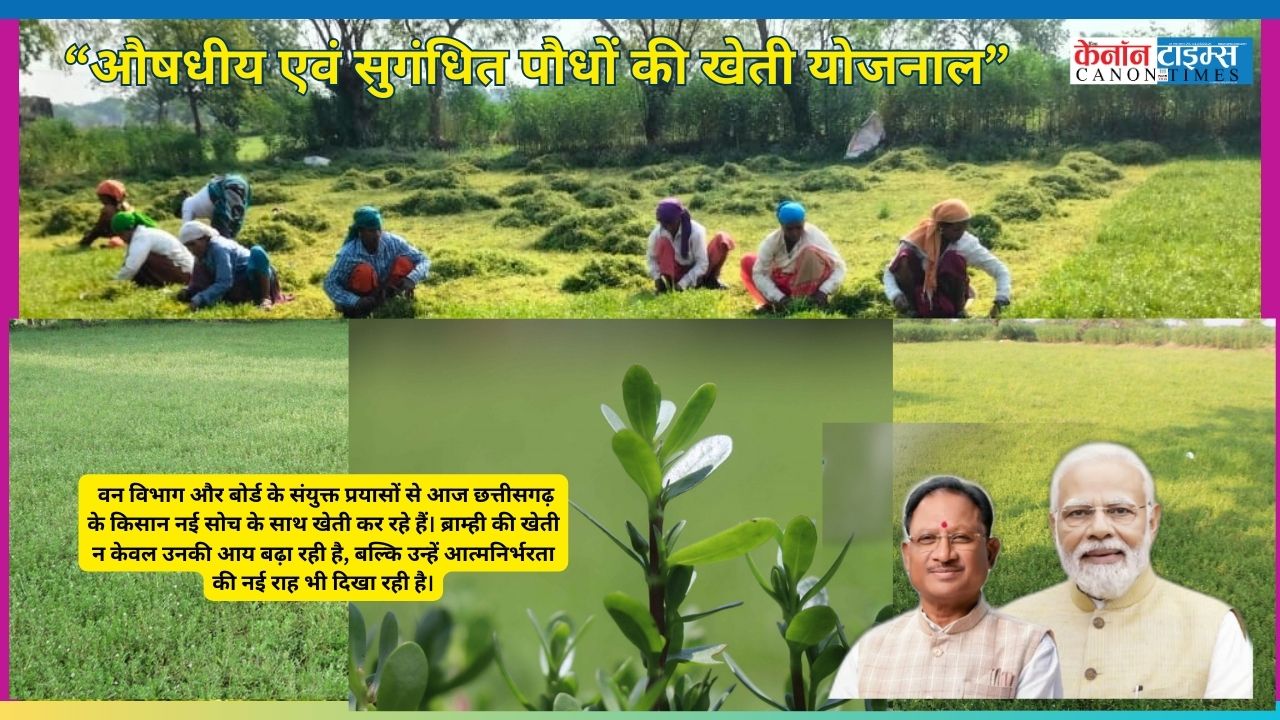
Chhattisgarh’s farmers are pioneering a transformative shift from water intensive paddy cultivation to Brahmi (Bacopa monnieri), an ancient Ayurvedic herb that delivers exceptional profitability with minimal investment. This low maintenance crop, thriving in the state’s marshy lowlands, is reshaping rural economies by offering net annual profits of up to Rs 1.2 lakh per acre, far outstripping traditional rice farming’s thin margins.
Why Brahmi Outshines Paddy
Paddy farming demands high inputs: irrigation, fertilizers, and labor, often yielding modest returns amid volatile markets and climate risks. Brahmi flips this script. Initial planting costs around ₹21,000 per acre annually, producing up to 30 quintals of harvestable leaves sold at premium rates totaling Rs 1.5 lakh. Once established, plants yield three crops every four months for 3 to 4 years, requiring little irrigation or pest control. It excels in waterlogged, nutrient poor soils where paddy struggles, reducing risks from floods or droughts.

Free saplings from the Chhattisgarh Tribal, Local Health Tradition and Medicinal Plants Board slash startup costs further. Buyback agreements with processors ensure assured markets, sparing farmers the distress of unsold produce.
Medicinal Powerhouse Meets Global Demand
Brahmi’s resurgence stems from its proven health benefits, rooted in millennia of Ayurvedic use. It sharpens memory, alleviates anxiety, and supports cognitive function, making it a staple in brain tonics, stress relief supplements, and beauty products. Leaves are processed into extracts for pharmaceuticals, cosmetics, and herbal exports, feeding booming Ayurveda, Unani, and homeopathy sectors.
India’s herbal industry, valued at billions, craves domestic supply to cut import reliance. Chhattisgarh’s climate, humid, fertile, and monsoon fed, positions it ideally to lead production, with exports eyeing international wellness markets.
Ground Level Triumphs and Momentum
In Raipur and Dhamtari districts, 36 progressive farmers now cultivate Brahmi across 15 acres, harvesting success stories that ripple outward. Pioneers report consistent yields even in “problem” lands, inspiring neighbors to diversify. Under Forest Minister Kedar Kashyap and Board Chairman Vikas Markam, initiatives provide technical training, quality seeds, and marketing linkages, fostering self reliance.
Government schemes like “Lakhpati Didi” empower women through Brahmi, targeting Rs 1 lakh annual income per acre. Early adopters harvest a ton of dried herb per cutting, multiplying incomes threefold.
Broader Implications for Indian Agriculture
This model exemplifies crop diversification’s power. It conserves water, enriches soil microbes, and generates jobs in processing and trade, uplifting tribal communities. Nationally, scaling Brahmi on marginal lands could double farmers’ incomes, aligning with Atmanirbhar Bharat by blending tradition with commerce.
Challenges persist, awareness gaps, supply chain gaps, but successes prove viability. Policymakers must expand buybacks, research high yield varieties, and integrate Brahmi into national herbal missions. For Chhattisgarh’s tillers, the path from paddy to prosperity is clear: embrace the herb that heals minds and wallets alike.

Author: This news is edited by: Abhishek Verma, (Editor, CANON TIMES)
Authentic news.